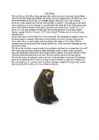
This adaptation is probably due to the lowland climates it inhabits. Dark black or brown-black fur covers its body, except on the chest, where there is a pale orange-yellow marking in the shape of a horseshoe. Similar colored fur can be found around the muzzle and the eyes. These distinctive markings give the Sun Bear its name. The diet of the Sun Bear consists mainly of invertebrates and fruits but as omnivores they will eat a wide variety of foods including small vertebrates, such as lizards, birds, and turtles, eggs, the young tips of palm trees, nests of bees, berries, sprouts, roots, and coconuts. In fact, Sun Bears have been observed to eat over 100 insect species and over 50 plant species. The Sun Bear does not hibernate, and, as a result, it can reproduce year-round. The offspring reach sexual maturity after 3-4 years and may live up to 30 years in captivity. A female Sun Bear can produce 1 to 2 cubs per year
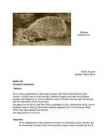
Igal aastal hukkub maanteedel suur hulk siile. KASUTATUD ALLIKAD http://loodusaed.kirikiri.ee/article.php3?id_article=3 http://www.roadkills.pixeldiversity.com/pics/igel.jpg http://et.wikipedia.org/wiki/Siil http://bio.edu.ee/loomad/Imetajad/imindex.htm http://bio.edu.ee/loomad/Imetajad/ERIEURs.jpg http://www.arkive.org/media/80/807DF4987E054C3E8867 FFD36A078BEE/Presentation.Large/photo.jpg http://www.commanster.eu/commanster/Vertebrates/Mammals/SpTracks/Erinaceus.euro paeus.jpg https://www.swedbank.ee/img/about/support/siil.gif http://www.hlasek.com/foto/erinaceus_europaeus_ac6463.jpg http://www.folklore.ee/rl/pubte/ee/eluolu/elu2/30.gif "Eesti nõukogude entsüklopeedia"
The species of dwarf lemur found at the DLC, Cheirogaleus medius, is native to the dry deciduous forests common in western and southern Madagascar. These small lemurs can live in primary forests, established secondary forests as well as the gallery forest of the southern spiny desert. Typically solitary foragers, the dwarf lemurs have a diverse diet consisting mostly of fruit and flower nectar. While they are thought to be less carnivorous than mouse lemurs, they too eat insects and small vertebrates. Dwarf lemurs may be responsible for pollinating some species of baobab trees. In addition, they play an important role in the ecology of the tropical forest by aiding in the dispersal of small seeds. As a part of their normal scent marking routine, dwarf lemurs often smear feces onto branches as they walk along well-traveled arboreal pathways through the forest, thereby providing a perfect microclimate for the germination of parasitic plants common in the forest.
The island of Floreana was populated with a group of convicts' in October 1832. Charls Darwin visited the island in 1835, he spent there 5 weeks. Nowadays five of the islands are populated with about 40 000 inhabitants. The name Island of Galapagos means island of tortoises. Every animal or plant had to cross about 1000 km of open ocean to arrive on Galapagos. Despite the trials of arrival, over 560 species of native plants, over 55 species of native land vertebrates and 1700 species of native insect are found on Galapagos. There are no large mammals, the key herbivores are reptiles, and the top predators are birds and snakes. Mammals on the Galapagos include two species of bat, two endemic rice rat species and its most famous mammals - the Galapagos sea lion and fur seal. There can be identified four broad categories of habitat (the coastal zone, the dry lowlands, a transition zone and the moist uplands), each with its distinctive species.
Introduction If you were asked to show on a world map the regions with the most biodiversity, your finger would probably end up pointing at the Amazon, the Congo Basin or the island of Borneo. But I chose New Guinea, an island that represents no more than 1% of the world's landmass, an array of extraordinary animals and plants have also flourished, such as tree kangaroos and birds of paradise. Close to 10% of the world's vertebrates are concentrated here, while 7% of the world's higher (vascular) plants grow on the island's productive soils. 3 Geography Papua New Guinea consists of over 600 islands and lies in the middle of the long chain of islands stretching from mainland South-East Asia. The mainland and larger islands are mountainous and rugged, divided by large fertile upland valleys. Fast- flowing rivers from the highlands descend to the coastal plains
 annaabi.ee