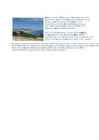
During the Roman Empire, the island became a quiet imperial outpost, removed from the important trading routes of the time. After the fall of the Roman empire and a brief period of first Vandal and then Byzantine rule, the island was conquered by the Moors, as well as much of the Iberian peninsula. Under Islamic rule, Ibiza came in close contact with the city of Dénia (the closest port in the nearby Iberian peninsula, located in the Valencian Community) as the two areas were administered jointly by the same taifa. Moreover, the tribes who lived in Ibiza and Denia during the period 10601085 were Moorish tribes named Bno-Alaglab & Bano- Mujahed. Geography Ibiza is a part of a group of the western Balearic archipelago called the Pitiusas or "Pine Islands" composed of itself and Formentera. The Balearic island chain includes over fifty
CarthaginianPunic civilization. During the Roman Empire, the island became a quiet imperial outpost, removed from the important trading routes of the time. After the fall of the Roman empire and a brief period of first Vandal and then Byzantine rule, the island was conquered by the Moors, as well as much of the Iberian peninsula. Under Islamic rule, Ibiza came in close contact with the city of Dénia (the closest port in the nearby Iberian peninsula, located in the Valencian Community) as the two areas were administered jointly by the same taifa. Moreover, the tribes who lived in Ibiza and Denia during the period 10601085 were Moorish tribes named Bno Alaglab & BanoMujahed. The island was reclaimed for Christendom by Aragonese King James I of Aragon in 1235. Since then, the island has had its own selfgovernment in several forms but in 1715 King Philip V of Spain abolished the local government's autonomy. The arrival of
 annaabi.ee