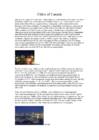
Cornwallis in 1749.[2] After a protracted struggle between residents and the Governor, the City of Halifax was incorporated in 1841.On April 1, 1996, the government of Nova Scotia dissolved the City of Halifax, and amalgamated the four municipalities within Halifax County and formed Halifax Regional Municipality, a single-tier regional government covering that whole area. Today the area of the former City of Halifax is now referred to as an unincorporated "provincial metropolitan area" by the provincial government's place name website[3] and the area is referred to as "Halifax, Nova Scotia" for civic addressing and as a placename.The area is now administered as two separate community planning areas by the regional government for development, Halifax Peninsula and Mainland Halifax. It forms a significant part of the Halifax urban area. Residents of the former city are referred to as "Haligonians Halifax
This method measures GDP by adding incomes that firms pay households for the factors of production they hire- wages for labor, interest for capital, rent for land and profits for entrepreneurship. The "National Income and Expenditure Accounts" divide incomes into five categories: - Wages, salaries, and supplementary labour income - Corporate profits - Interest and miscellaneous investment income - Farmers' income - Income from non-farm unincorporated businesses These five income components sum to net domestic income at factor cost. Two adjustments must be made to get GDP: - Indirect taxes minus subsidies are added to get from factor cost to market prices. - Depreciation (or capital consumption) is added to get from net domestic product to gross domestic product. Components of GDP by Expenditure GDP (Y) is a sum · Consumption (C), · Investment (I), · Government Spending (G) and
 annaabi.ee