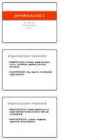
Uncertainty avoidance scores are higher in Latin countries, in Japan, and in German speaking countries, lower in Anglo, Nordic, and Chinese culture countries. 49 Määramatuse vältimine 50 Võimudistants That is the extent to which the less powerful members of organizations and institutions (like the family) accept and expect that power is distributed unequally. This represents inequality (more versus less), but defined from below, not from above. It suggests that a society's level of inequality is endorsed by the followers as much as by the leaders. Power distance scores are high for Latin, Asian and African countries and smaller for Germanic and Scandinavian countries. That is the extent to which the less powerful members of organizations and institutions (like the family) accept and expect that power is distributed unequally
The important thing is not what states were called or how long they lasted, but how they were organised, maintained control, gained and lost legitimacy. South African state formed out of: Conquest Colonization Slavery Indentured labour Racially discriminatory laws reserved jobs for whites; differential pay-scales etc Post 1910 state strong and centralized institutionalised racism: "power, wealth and privileges [distributed] unequally on a racial basis" (Giliomee, 1995, p190) Farming and mining (the basis of the economy) both required large work forces. Once slavery was abolished, need for to generate labour force. Taxation (poll tax) used to force blacks into labour force. Segregation used to control access of blacks to land. A strong, centralized and unequal state. 1936 Black voters removed from common roll. 1956 Coloured voters removed from common roll.
level they are relativist and allow many currents to flow side by side. Määramatuse vältimine 2 Uncertainty avoidance scores are higher in Latin countries, in Japan, and in German speaking countries, lower in Anglo, Nordic, and Chinese culture countries. Määramatuse vältimine Võimudistants That is the extent to which the less powerful members of organizations and institutions (like the family) accept and expect that power is distributed unequally. This represents inequality (more versus less), but defined from below, not from above. It suggests that a society's level of inequality is endorsed by the followers as much as by the leaders. Võimudistants 2 Power distance scores are high for Latin, Asian and African countries and smaller for Germanic and Scandinavian countries. Võimudistants Lühiajaline vs pikaajaline suundumus This fifth dimension was found in a study among
People expect quick results Cultures with long-term orientation: Traditions adapted for modern context. People are thrifty (managing money and resources in a cautious and sensible way so as to waste as little as possible). Large amount of savings. People persevere (keep carrying on despite dificulties) for slow results Power distance - the extent to which less powerful members of institutions and organizations within a country expect and accept that power is distributed unequally In large power distance cultures: subordinates expect to be told what to do, wide range of salaries exist In low power distance cultures subordinates = supervisors, salary ranges rather small Individualist cultures stress self-realization, collectivist ones require that the individual fits the group Individualist cultures- people look after themselves and their immediate family In collectivist ones they look after a wider group in exchange for loyalty
· San Francisco Peace Treaty signed on September 8, 1951, went into effect on April 28, 1952 *Internment of Japanese = Japanese American internment was the World War II internment in "War Relocation Camps" of about 110,000 people of Japanese heritage who lived on the Pacific coast of the United States. The U.S. government ordered the internment in 1942, shortly after the Imperial Japan's attack on Pearl Harbor. The internment of Japanese Americans was applied unequally as a geographic matter: all who lived on the West Coast were interned, while in Hawaii, where 150,000-plus Japanese Americans comprised over one-third of the population, only 1,200 to 1,800 were interned. Sixty-two percent of the internees were American citizens. *Feb. 19, 1942 President Roosevelt designated military strategic areas on the West coast · March 18, 1942 order to relocate all individuals of Japanese ancestry from the stragegic areas
As he said this, she could easily see that he had no doubt of a favourable answer. He spoke of apprehension and anxiety, but his countenance expressed real security. Such a circumstance could only exasperate farther, and, when he ceased, the colour rose into her cheeks, and she said: "In such cases as this, it is, I believe, the established mode to express a sense of obligation for the sentiments avowed, however unequally they may be returned. It is natural that obligation should be felt, and if I could feel gratitude, I would now thank you. But I cannot--I have never desired your good opinion, and you have certainly bestowed it most unwillingly. I am sorry to have occasioned pain to anyone. It has been most unconsciously done, however, and I hope will be of short duration. The feelings which, you tell me, have long prevented the acknowledgment of your regard, can have little difficulty in overcoming
 annaabi.ee