The Great Wave off Kanagawa The Great Wave off Kanagawa , also known as The Great Wave or simply The Wave, is a woodblock print by theJapanese artist Hokusai. An example of ukiyo-e art, it was published sometime between 1830 and 1833[1] (during the Edo Period) as the first in Hokusai's series Thirty-six Views of Mount Fuji(Fugaku sanjrokkei (?)), and is his most famous work. This particular woodblock is one of the most recognized works of Japanese art in the world. It depicts an enormous wavethreatening boats near the Japanese prefecture of Kanagawa. While sometimes assumed to be a tsunami, the wave is, as the picture's title notes, more likely to be a large okinami literally "wave of the open sea." As in all the prints in the series, it depicts the area around Mount Fuji under particular conditions, and the mountain itself appears in the background. COPIES Copies of the print are in many Western collections, including the Metropolita...
The Great Wave off Kanagawa By Joosep Tiismus The Great Wave off Kanagawa Copy of The Great Wave at Metropolitan Museum of Art Ukiyo-e art The Great Wave off Kanagawa Non original copies and derivative works sculpture «Die Woge», in Dresden Billboard in Hokkaid, Japan. Sources: http:// www.metmuseum.org/Collections/search-the-collections/60013238 http:// www.bbc.co.uk/ahistoryoftheworld/objects/MAPlqOEHRsmI1awIHQzRSQ http:// rsnr.royalsocietypublishing.org/content/early/2009/02/23/rsnr.2007.0039.full http://en.wikipedia.org/wiki/British_Museum Thanks For Listening!
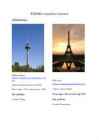
Pildileht visuaalsest kunstist Arhitektuur Tallinna teletorn (http://et.wikipedia.org/wiki/Tallinna_telet orn) Eiffeli torn (http://et.wikipedia.org/wiki/Eiffeli_torn) Arhitekt: David Bassiladze, Juri Sinis Ehituse algus: 1975 ja ehituse algus: 1980 Arhitekt: Gustave Eiffel Zanr: profaanne Ehituse algus: 1887 ja ehituse lõpp: 1889 Asukoht: Tallinn Zanr: profaanne Asukoht: Prantsusmaa Disain Lighting the Sails (http://flavorwire.com/97346/laurie- anderson-lights-the-sails-in-sydney) ClassXFurniture. Tool ,,Allegro3" Disainer: Laurie Anderson (http://www.etdm.ee/et/muu...
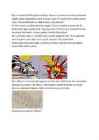
Roy Lichtenstein oli USA popkunsti esindaja. Popkunst on nimetuse saanud inglisekeelsetest sõnades popular art(populaarne kunst). Popkunst sündis 20. Sajandi keskel Londonis ja New- Yorgis. Popkunsti põhimõte on ,,Mida tavalisem, seda popilikum" Keskseks teemaks on tarbimisühiskonna argipäev. Kunst on suunatud tavainimestele. Ei idealiseeritud, pigem populariseeriti. Väga sõjavastane. Erksad värvid ja kontrastid. Kasutati koomikseid ,kaubamärke, reklaami, poptähti, kuulsaid filminäitlejaid. Roy Lichtenstein sündis 27. Oktoobril 1923 ja suri 29. Septembril 1997. Roy Lichtensteini teosed kujutavad endast mõne üksiku kujundi suurendust. Tema maal säilitab koomiksipildikesele omase tingliku joonistuse ja koloriidi, kuid palju kordi suurendatud kujund mõjub ühtäkki uudsena. Teos ,,Whaam!" on üks tuntumaid popkunsti töid. See valmis 1963. Aastal. See asub Londoni kaasaegse kunsti galeriis Tate Modern. Vasakul paneelil näidatakse lennukit,...
Jaapani kunst Sintoism ja templid · Jaapanlaste algne usund sintoism õpetab, et kogu loodus on hingestatud. Usutakse, et jaapanlaste keiser (tenno), kes on vahendajaks taeva ja maa vahel, pärineb päikesejumalannast. · Sintoism ei soosinud kujutavat kunsti, kuid templeid hakati ehitama juba 3. sajandil. Eeskujuks olid talumajad ning vanimatel templitel olid kõrged ja paksud õlgedest viilkatused, mis toetusid puust postidele. · Ühe sellise templi vorm on säilinud, sest rohkem kui tuhat aastat on iga 20 aasta järel ehitatud selle templi täpne koopia, misjärel vana tempel on pidulikult hävitatud. · Püstpalkidele toetuv massiivne katus on jäänud jaapani rahvaliku arhitektuuri üheks omapäraks tänaseni. Valge Haigru ehk Himeji linnus Himejis asub täiuslikem Jaapani vanadest linnustest. Sellel on traditsioonilises jaapani stiilis katuste ja ohtrate viiludega peatorn, mis kerkib müüride ja vallikraavidega ümbritsetud komp...
Some of the things you will learn in THE CODEBREAKERS • How secret Japanese messages were decoded in Washington hours before Pearl Harbor. • How German codebreakers helped usher in the Russian Revolution. • How John F. Kennedy escaped capture in the Pacific because the Japanese failed to solve a simple cipher. • How codebreaking determined a presidential election, convicted an underworld syndicate head, won the battle of Midway, led to cruel Allied defeats in North Africa, and broke up a vast Nazi spy ring. • How one American became the world's most famous codebreaker, and another became the world's greatest. • How codes and codebreakers operate today within the secret agencies of the U.S. and Russia. • And incredibly much more. "For many evenings of gripping reading, no better choice can be made than this book." —Christian Science Monitor THE ...
Handbook of Meat Processing Handbook of Meat Processing Fidel Toldrá EDITOR A John Wiley & Sons, Inc., Publication Edition first published 2010 © 2010 Blackwell Publishing Blackwell Publishing was acquired by John Wiley & Sons in February 2007. Blackwell’s publishing program has been merged with Wiley’s global Scientific, Technical, and Medical business to form Wiley-Blackwell. Editorial Office 2121 State Avenue, Ames, Iowa 50014-8300, USA For details of our global editorial offices, for customer services, and for information about how to apply for permission to reuse the copyright material in this book, please see our website at www.wiley.com/ wiley-blackwell. Authorization to photocopy items for internal or personal use, or the internal or personal use of specific clients, is granted by Blackwell Publishing, provided that the base fee is paid directly to the Copyright Clearance Cent...
 annaabi.ee