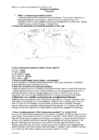
Most of the rain falls as convection rain in the summer and sometimes frost and snow may occur in the winter. 6. What is the role of wildfires in the temperate grassland plants’ lifecycle? Wildfires play a very important role. They allow the grasslands to be open and free of trees and shrubs. Any seedling of a tree that appears is killed off by the intense heat. If the fire does not clear out the seedlings, the grasslands would become a shrubland changing forever. Remarkably, the plants in the grasslands have adapted to the wildfires that come through, and actually need them to keep healthy and grow new vegetation in the spring 7. How are plants adapted to life in temperate grassland? (vt. ka õpik lk 61) During a fire, while above-ground portions of grasses may perish, the root portions survive to sprout again. Some prairie trees have thick bark to resist fire. Prairie shrubs readily resprout after fire
ka kliimavööndi piires. Biomes are climatically and geographically defined as similar climatic conditions on the Earth, such as communities of plants, animals, and soil organisms,[1] and are often referred to as ecosystems. A fundamental classification of biomes is: 1. Terrestrial (land) biomes 2. Aquatic biomes (including Freshwater biomes and Marine biomes) Biomes are often known in English by local names. For example, a temperate grassland or shrubland biome is known commonly as steppe in central Asia, prairie inNorth America, and pampas in South America. Tropical grasslands are known assavanna in Australia, whereas in Southern Africa it is known as veldt (fromAfrikaans). 9. Mis on ökotüüp? Ökotüüp e ökoloogiline rass sarnaselt kohastunud organismid ühe liigi piires (nt lillakas turbasammal). Võib kajastuda süstemaatikas (nt alamliikide eristamine).
 annaabi.ee