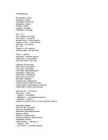
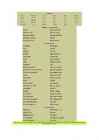
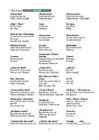
Nädalapäevad: Esmaspäev---Lunes Teisipäev---Martes Kolmapäev---Miercoles Neljapäev---Jueves Reede---Viernes Laupäev---Sabado Pühapäev---Domingo Jah --- Si Jah, muidugi ---Si, claro Jah, palun --- Si, gracias Ma olen nõus --- Esto acuerdo Kuidas soovid --- Como quieras Võib olla --- Es posible Ei --- No Tänan, ei --- No, gracias Kindlasti mitte ---En absoluto Tänan --- gracias Suur tänu --- Muchas gracias Väga kena --- Muy amable Pole tänu väärt--- De nada hea/halb---bueno/malo kallis/odav---caro/barato noor/vana---joven/vijeo suur/väike---grande/pequeo pikk/lühike---largo/corto kuum/külm---caliente/frio rikas/vaene---rico/pobre ilus/inetu---bello/feo rõõmus/kurb---alegre/triste avatud/suletud---abierto/cerrado sügav/madal---profundo/poco profundo
By carefully analyzing the mistakes made in the work, many important discoveries which might be ignored before would be noticed that can later help to progress in something. What can also be brought up as a good example is analyzing errors after losing, so later, after correcting the mistakes, a win would be more likely to come. But progress and new discoveries can sometimes be achieved also without any mistakes made. For example, if a bright idea occurs in someones head, it is posible to work out something new and innovating by not making any errors. But it is rarely like that. To sum up, it can be said that mistakes do lead to progress and discovery - the knowledge gained from these mistakes is invaluable in progressing to greater heights. At the same time, it is not as though every discovery or progress in any field is always preceded by mistakes.
medicamento que pueda llegar a las verdaderas raíces de estos síntomas. Mis experiencias con Catherine y otros pacientes como ella así me lo han demostrado. Ahora sé que se puede curar, en vez de limitarse a disimular o enmascarar los síntomas. Durante esa primera sesión yo trataba, con suave insistencia, de hacerla volver a la niñez. Como Catherine recordaba asombrosamente pocos hechos de sus primeros años, me dije que debía analizar la posibilidad de utilizar la hipnoterapia como una posible forma de abreviar el tratamiento para superar esa represión. Ella no recordaba ningún momento especialmente traumático de su niñez que explicara esos continuos miedos en su vida. En tanto ella se esforzaba y abría su mente para recordar, iban emergiendo fragmentos aislados de memoria. A los cinco años había sufrido un ataque de pánico cuando alguien la empujó desde un trampolín a una piscina. No obstante, dijo que incluso antes
¿Cuánto tiempo llevas trabajando allí? How long have you been working there? Le pongo con .... I will put you through to ..... Me da vergüenza. I feel ashamed. Lo hablo, pero muy mal (el ingles). I speak it, but very badly (English). Estuve en Madrid con mi marido hace un par de años. I was in Madrid with my husband two years ago. Lo antes posible ... As soon as possible .... Disfruté. I enjoyed it. Nos llevábamos mal. We did not get on. Pienso irme. I am thinking of going. Falta mucho para mi cumpleaños. My birthday is a long way off. Está lloviendo a cántaros. It is raining cats and dogs.
When one person tells (decir) or asks (pedir) another person to do something. 3. After verbs of emotion or command, such as esperar (to hope), sentir (to be sorry), temer (to fear), alegrarse (to be glad), mandar (to order), rogar (to request), when there is a change of subject. 4. After dudar (to doubt) and other verbs expressing uncertainty (negative of creer), as well as after quizás, tal vez and acaso (maybe) to reinforce the idea of doubt. 5. After most impersonal expressions, such as es posible que / puede que (it's possible), es importante que (it's important), es necesario que / hace falta (it's necessary) if there is a subject 46 for the subordinate verb. 6. In adjective clauses is the antecedent is indefinite 7. After certain conjunctions, such as para que (in order that), sin que (without), and antes que (before) 8. After time conjunctions, such as cuando (when), en cuanto (as soon as), hasta que (until), when future is implied
tabby cats, smokes are genetical solid colour cats; this difference was not understtod in the early 1900s. According to Milo Denlinger in 1947, "Masked silvers are a new variety and very few are bred." Denlinger went on to describe the variety: "The ideal masked silver is a very beautiful animal; in colouring or, I should say, marking, they should resemble the Siamese Cat; that is to say, they should have a black mask, or face, black feet, and legs. The body should be as pale a silver as posible." The eyes were to be deep golden or copper. Several authors have observed that the description of the masked silver resembles that of the Siamese. OTHER COLOURPOINTS In addition to the recognised breeds, the colourpoint pattern is recognised as a permissible colour/pattern in many other breeds. In most cases the cat is simply described as a "colourpoint 'breed-name' ". The colourpoint Japanese Bobtail has only recently found its
 annaabi.ee