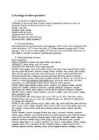
Metaphoe- based upone a perception of similarity. Mouse- computer mouse and quiet as a mouse. Dead metaphore- flowerbed Conduit metaphor-ideas and meanings are objects. Conceptual metaphore- the essence is understaning and experience one kind of thing in terms of the other. Orientational metaphor- happy is up, sad is down. Metonymy- is a word that is not called by its own name but by the name it is assosiated with. Nt hollywood- we know it as a filmindustry but acutally it is a palce name. 15) polysemy and homosemy Polysemy- the meaning of the word depends on the sentence. The content- where the word is placed in the sentence. Homonymy- words have same spelling, same pronounciation, but different meaning. Nt fair- laat ja õiglane. 16) Paradigmatic relations 17) synonyms A word that shares the same denotatiove, with another word, different spelling, pronaunciation but the same meaning. Nt male masculine Absolute synonyms- absolute aspects of meaning Near-synonym- nearly similar meaning
Mouse- computer mouse and quiet as a mouse. Metonymy- is a word that is not called by its own name but by the name it is associated with Hollywood. Meaning restriction and extension. Specialization of meaning- means narrowing the meaning, extended - widened meanings. Generalization. Meaning degradation and elevation Pejoration (worsening of meaning) deterioration. Amelioration- improvement of meaning. Monosemy Word only has one meaning. Polysemy the meaning of the word depends on the sentence. The content- where the word is placed in the sentence. Homonyms words with the same spelling and pronunciation but a different meaning. Skate, mouth Homophones words that are pronounced the same. Rose, to-two-too Homographs words that are spelled the same. Lead, close, wind. Synonyms words that share the same denotative, different spelling and pronunciation but the same meaning. e.g. male masculine
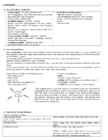
Also awfully. Legendary – famous OR legendary – from a story. 36. Monosemy – word has a single meaning A one-to-one match between a word and a meaning is called monosemy. Monosemy is probably most clearly found in specialized vocabulary dealing with technical topics. Example: Quinsy (angiin) – a complication of tonsils However, even words belonging to the area of terminology often have multiple meanings. Nylon, magnolia, ozon 37. Polysemy – word has more than one meaning The association of one word with two or more distinct meanings. A polyseme is a word or phrase with multiple meanings. According to some estimates, more than 40% of English words have more than one meaning. The fact that so many words (or lexemes) are polysemous. Deals with different senses of a word or phrase. Because there is a shortage of words and there is also a tendency to use them figuratively.
governor pilot head of a state fond foolish affectionate minister servant head of a ministry 35. Monosemy A word having only one possible meaning. It is very rare in most vocabularies, but preferred in the case of technological terminology. o Quinsy, atrophy, ozone 36. Polysemy Coexistence of many possible meanings for a word or a phrase. Short commonplace words have the most meanings (and also the most collocations with them) – set, make, take etc 37. Homonyms Each of two or more words having the same spelling or pronunciation, but different origin and meaning. Accidental similarity. o Band – ribbon/group of musicians Grammatical homonyms
meaning and meaning shift but are addressed neither by Davidson's view nor by Searle's. They are pervasive; they occur in nearly every sentence that comes out of our mouths. I will try to acquaint you with them; unfortunately, the theories of metaphor that exploit them are very dense and complicated, and I will not have the space to expound those. Metaphor as analogical As a way into the area in question, I introduce the infinite polysemy thesis defended by Weinreich (1966), Lyons (1977), Cohen (1985), and Davidson (1986), as well as by Ross and Kittay and by relevance theorists. That doctrine concerns lexical meaning, the meanings of words and short phrases rather 188 The dark side than those of whole sentences. It is that virtually any word, even a pronoun, may take on any number of novel and distinct lexical meanings without limit, given a suitable variety of environments within sentences in which they occur.
 annaabi.ee