Christian Poetry · 55 B.C. Julius Ceasar - christianity to British Isles · 449 A.D Anglo-Saxons - pagans = christianity declined · 597 A.D. St. Augustine - within 100 years all country into christianity Caedmon and Alfred the Great Ceadmon · first religious poet of British literature · "the father of English song" · Hymn of Creation - between 658 and 680 - the oldest preserved · turned the Bible stories into verse from = poetic paraphrase Alfred the Great · first notable written literature in Anglo-Saxon · Anglo-Saxon Chronicles, 892 The Chronicle · most important source for England's history up to 892 · changes into spelling of the language · history - 1st national continuous history of a Western country - own language · literature - 1st great book of English prose To sum up · Beowulf - the oldest and the most important - pagan literature
Why do you think they say that? Do you agree? Give reasons. ---------------------------------------------------------------------------------------------------------------- You are expected to structure your monologue and present it speaking fluently with appropriate pronunciation and intonation and only natural pauses. You are expected to express yourself confidently, clearly and politely. Interact naturally with appropriate openings, fillers and amplifications. Be logical and clear, paraphrase successfully. Your vocabulary should be precise and appropriate, as well as the register. Use a VARIETY of simple and complex grammatical structures as appropriate. Your monologue can be structured as following: 1. Introduction: state the topic (the conviction held). Recite the task. 2. Developing arguments with appropriate openings, fillers and amplifications: - an account for such belief Here you are supposed to speculate about the reasons for holding the
weeks ago. I am writing in connection with a faulty appliance which I recently bought from your store. I am writing to express my utmost dissatisfaction with the service I received from your staff. I wish to make a serious complaint regarding your inefficient staff. Paragraphs 2 and 3 Describe the complaint in more detail. Give support! Include dates and times, people involved, the inconvenience you’ve been caused, etc. Do not copy the prompt, paraphrase instead. Use all the prompts, dividing them logically between paragraphs. Link ideas with appropriate linking words and phrases. NB! Try to be clear and factual rather than emotional. Final paragraph Use the final paragraph to say what action you want to be taken. I must insist that you refund the cost of the bill. I must ask you to… I feel that I am entitled to a refund… I hope that this matter will receive your prompt attention and that my TV set will
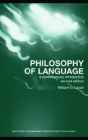
. . "?), Russell offers a recipe for paraphrasing standard types of whole sentence containing "the," in such a way as to exhibit the role of "the" indirectly, and to reveal what he called the sentences' "logical forms." (He does not here treat plural uses of "the," or the generic use as in "The whale is a mammal." Notice that definite descriptions can be formed without use of "the," for example by way of possessives, as in "my brother" or "Doris' egg salad sandwich," though perhaps we might paraphrase those along the lines of "the brother of me.") Here is Russell's contextual definition of "the." Let us take a paradigmatic sentence, of the form "The F is G." (5) The author of Waverley was Scotch.4 (5) appears to be a simple subjectpredicate sentence, referring to an individual (Sir Walter Scott) and predicating something (Scottishness) of him. But appearances are deceiving, Russell says. Notice that the ostensible
74; italics mine). Literal translations of these paraphrases Á instead of their replacement by the culture-specific items existing in Romanian language Á would, obviously, surprise the readers, and that is precisely why they need to be used. Paraphrase, which was for the travel narrator a domesticating strategy, becomes, for the translator, a foreignizing one, as it distances the readers from a culturally familiar object, making them reflect on those elements that are regarded as different by the foreign travellers.
secrecy, Ibn ad-Duraihim, according to Qalqashandi, gave seven systems of ciphers. This list encompassed, for the first time in cryptography, both transposition and substitution ciphers. Moreover, one system is the first known cipher ever to provide more than one substitute for a plaintext letter. Remarkable and important as this is, however, it is overshadowed by what follows— the first exposition on cryptanalysis in history. It appeared in full maturity in Qalqashandi's paraphrase of Ibn ad- Duraihim, but its beginnings are probably to be found in the intense and minute scrutiny of the Koran by whole schools of grammarians in Basra, Kufa, and Baghdad to elucidate its meanings. Among other studies, they counted the frequency of words to attempt a chronology for the chapters of the Koran, certain words being considered as having been used only in the later chapters. Lexicography advanced this. In making a dictionary,
 annaabi.ee