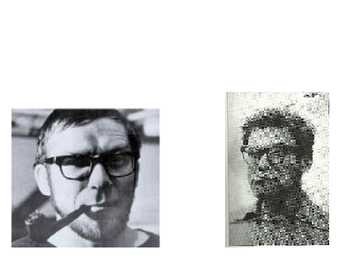
October 1970 Schools: homevillage school in Ühtri, Kärdla school. Franch Lycee and Tartu art school. 1949 Ülo Sooster were arested. He was in a prison camp, in Karanganda. In 1956 the returned to Estonia together. 1957 he went back to Moscow. Tennopent Sooster 28. December 1957 Treasured member of Moscow's alternative art crowd. His works weren't missing from practically a single exhibition in Moscow. International artist. His art. Three periods: pallaslik, modernistic and surrelistic. Pallaslik art: time when he was learning at Pallas Art School, 19431949 Modernistic and surrelistic art were parallel. Junipers, fishes and eggs. Main tools: pencil, oil, Indian ink, felt marker. Personal exhibitions 1971 Tartu Art Museum 1971 Tallinn Art Hall Lounge 1979 The United Committee of Graphics, Moscow 1985 Tartu Art Museum 1985 Estonian SSR National Art Museum 1993 KüüGallery, Tartu 2001 Estonian Art Museum Color Juniper. Oil. 1966
single exhibition of progressive Moscow art shown at alternatiive venues in Moscow and impressime galleries abroad. In 1966 his works were on view Poland, Czehoslovakia and Italy. In 1967 in Rome. And in Colonge, Barcelona and elsewhere in 1970. · Ülo Sooster is one of the few Estonian artist who should describe as an International artist. · [slaid 3] In his art you can distinguish three diffenert periods: pallaslik ( it's a art style which is affected by Pallas art school), modernistic and surrealistic. · Pallaslik art, time when he was learnin at Pallas Art school, 1943-1949. · Modernistic and surrealistic art can't be defined, because they were parallel in time · Main figures are junipers, fishes and eggs , which are associated with his childhood home in Hiiumaa, Ühtri. · He loved colors. And his main tools were : pencil , oil, Indian ink, felt marker
seisukohavõtud on üsna paratamatud. Kui iseloomustada asendit pol asendis, siis see on ikkagi kesktee ajakiri. 1957 Mana esimene peatoimetaja I. Grünthal siis Hellar Grabbi 1945 Välismaine Eesti Kirjanike Liit A. Mälk, K. Lepik, E. Nõu Tuulisui Kalju Lepik, Raimond Kolk jt. Tekkis juba üliõpilasajal, Rootsis taaselustub ja omandab oma kirjandusliku rolli. 2000 Eesti Kirjanike Liidu Stockholmi osakond Kunst: pallaslik värvikultuur hakkab kalduma abstraktsuse suunas. 1940-50ndatel võib tähendada seda, et mingit suurt muutust esteetilises plaanis ei ole. Kohe pärast MS suurt muutust ei näe, pigem võime näha tagasipöördumisi natuke vanema traditsiooni poole. Hennoste: hiiliv modernism pagulaskultuur on alalhoidlik ja selles situatsioonis kõva hääle tegemine mõjub teravalt. Tähelepanuväärne on see, et mitmed tuntud ja juhtivad autorid muudavad oma kirjutamisviisi. 18. oktoober 2010
 annaabi.ee