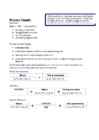
John lives in New York. We play football every day. You are really kind. The meeting starts at 3 PM. Use the Present Simple: with state verbs. to talk about situations in life that last a relatively long time. when an event is certain to happen in the future. to talk about events that we can't change (for example, an official meeting or a train departure). The Present Simple is also used in narrations (e.g. to tell a story or a joke), instructions (e.g. cooking) or commentaries (especially sport commentaries) Declarative Sentences: Subject Verb (present form) e.g. he, she, a dog, etc. + e.g. go, make, have, etc. Questions: DO/DOES Subject Verb (present form) + e.g. he, she, a dog, etc. + e.g. go, make, have, etc.
"In other words, even as one side of David remained fanatically loyal to the Revolution, another side avoided its grim reality." (Roberts, 1989, p.90) This piece of art already predicts the end of revolution with the message that revolution puts too much political and personal press on people and that they cannot resist it any more. Conclusion In conclusion, Jacques-Louis David paved the way for Revolution with his historical, mythological and philosophical narrations. His greatest masterpieces like Marat, The Tennis Court Oath and The oath of Horatii are true historical representations of the French Revolution. People of the 18th century looked at his work to get inspired and to better understand contemporary occurrences. Same can be said about art historians and various history interpreters, who examine the ideas, motives and style of David to get a better understanding of the French revolution. Without the contribution of Jacques-Louis David in
 annaabi.ee