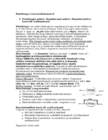
affected by pressure. b. If blood pressure and flow of blood to an organ are low then the smooth muscles of adjacent arterioles relax. The resulting vasodilation restores adequate blood flow. c. Conversely, if blood flow to an organ is excessive then smooth muscles of the arterioles will vasoconstrict, thus reducing flow to appropriate levels. d. Through myogenic control, arterioles are somewhat self-regulating. Vereliikumise mahtkiirus, õpik lk. 59 Veremaht. Blood volume is directly related to blood pressure. If the blood volume is increased then venous return of blood to the heart will increase, thus stroke volume will increase, thus cardiac output will increase and the blood pressure will rise. Therefore, blood pressure can be controlled by controlling blood volume.
Nicholson, D. W. 1999. Caspase structure, proteolytic Sayd, T., M. Morzel, C. Chambon, M. Franck, P. Figwer, substrates, and function during apoptotic cell death. C. Larzul, P. LeRoy, G. Monin, P. Cherel, and E. Cell Death and Differentiation 6:1028–1042. Laville. 2006. Proteome analysis of the sarcoplasmic Ojima, K., Y. Ono, N. Doi, K. Yoshioka, Y. Kawabata, fraction of pig semimembranosus muscle: Implications S. Labeit, and H. Sorimachi. 2007. Myogenic stage, on meat color development. Journal of Agricultural sarcomere length, and protease activity modulate and Food Chemistry 54:2732–2737. localization of muscle-specific calpain. Journal of Sentandreu, M. A., G. Coulis, and A. Ouali. 2002. Role Biological Chemistry 282:14493–14504. of muscle endopeptidases and their inhibitors in meat Ono, Y., K. Kakinuma, F. Torii, A. Irie, K. Nakagawa, tenderness
 annaabi.ee