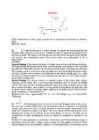
The amplified signal of the CE stage goes to the final stage,which is a class B emitter follower T8 and T9.Thanks to the balanced supply,the output is 0V when the input voltage is zero. 3)The input signal determines the output voltage swing requirement of the op amp.There are a number of single-supply amplifiers with inputs that range from 0V to the positive supply voltage.However,the input range can be set so that the signal only goes to within a few hundred millivolts of each rail.In many single-supply applications it is required that the input common-mode voltage range extends to one of the supply rails. 4)dc, voltage,feedback. 5)analog 7)FEATURES:high gain, high input resistance,low output resistance,controlled bandwidth extended to dc.ADVANTAGES:high frequencies,direct coupling. 8) How many electrons are there in the valence orbit of a silicon atom within a crystal? 8 14 24 32 What is the current gain of a bipolar transistor
toward ground as the capacitor discharges. The ability of an S/H to maintain the output in hold mode is dependent on the quality of the hold capacitor, the characteristics of the buffer ampli- fier (primarily input impedance), and the quality of the sample/hold switch (real electronic switches have some leakage when open). The amount of drift exhibited by the output when in hold mode is called the droop rate, and is spec- ified in millivolts per second, microvolts per microsecond, or millivolts per microsecond. A real S/H also has finite input impedance, because the electronic switch isn’t perfect. This means that, in sample mode, the hold capacitor is charged through some resistance. This limits the speed with which the S/H can acquire an input. The time that the S/H must remain in sample mode in order to acquire a full-scale input is called the acquisition time, and is specified in nanoseconds or microseconds.
 annaabi.ee