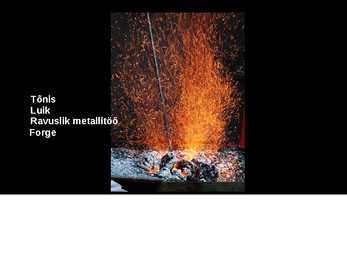
The primary advantage of a gas forge is ease of use, particularly for a novice. A gas forge is simple to operate compared to coal forges, and the fire produced is clean and consistent Coal/charcoal forge A forge typically uses bituminous coal or charcoal as the fuel to heat metal. A forge of this type is essentially a hearth or fireplace designed to allow a fire to be controlled such that metal introduced to the fire may be brought to a malleable state or to bring about other metallurgical effects. Forge fire in this type of forge is controlled in three ways: amount of air, volume of fuel, and shape of the fuel/fire. THE END
Where, m ´ Mass flow, kg·s-1 cp specific heat, J·kg-1·K-1 T temperature difference between the outlet and inlet temperatures of the fluid inside the coil, K The unsteady state is a little more difficult to understand, because the temperatures are changing with time. The unsteady heat transfer is important because of the vast amount of heating and cooling problems occurring industrially. In metallurgical processes it is needed to predict the heating or cooling rates of various geometries of metals in order to know how 3 much time it will take for them to reach a certain temperature. In the paper industry logs are immersed in steam baths before processing. In many processes materials are immersed in liquids of higher or lower temperatures resulting in unsteady heat transfer. (Geankoplis, 1993)
Engineers had to know the precise amount of stresses in bridge members to accommodate the thundering impact of locomotives. Founded on the pioneering work of the American Squire Whipple and other European engineers as Collignon, the last quarter of the 19th century witnessed broad application of both analytical and graphical analysis, testing of full-size members, comprehensive stress tables, standardized structural sections, metallurgical analysis, precision manufacturing and fabrication in bridge shops, publication of industry-wide standards, plans, and specifications, inspections, and systematic cooperation between engineers, contractors, manufacturers, and workers. The combined experience of the railroads, bridge manufacturing companies, and the engineering communities enabled the railroads successfully to tackle long-span iron and steel bridges and long-span trussed-roof train sheds, two engineering icons of the 19th century
 annaabi.ee