period. It was just a mosquito-infested swamp. 2) London became a trading centre during the Roman occupation. It was an important crossing point for the Romans over the river Thames. Market forces began to operate. With troops stationed and ships calling, merchants will inevitably set up shops. 3) The Celtic warrior queen Boudicca and her tribesmen fought against the Roman conquest and devastated Londinium. The city was burned down and its inhabitants massacred. 4) London was rapidly rebuilt and in AD 122 the Roman walls were built around it as a defence. 5) The Romans left Britain early in the 5th century because they had to cope with troubles elsewhere in the Empire. 6) Around AD 400 the Germanic tribes invaded Britain. 7) London fell into ruins because the Anglo-Saxons destroyed the Roman towns and formed many kingdoms that were hostile to one another. 8) All the small Anglo-Saxon kingdoms were united by king Egbert at
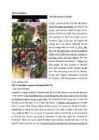
Dublin with 12,000 men with the intention of punishing those who had uprisen. He first attacked Drogheda and captured it, killing over 3000 people. He then marched on Wexford town and massacred several hundred people there. The surrounding towns of Cork, Bandon, Kinsale and Youghal surrendered. Cromwell left Ireland in 1650 having dealt a severe blow to the uprising Irish. The Cromwellian conquest of Ireland (164953) ~The Land to be paid~ A problem of equal concern to Cromwell after the Civil War, however, was the fact that most
or a strong place. Although the site was not important during the Celtic period (400 BC 43 AD) During the Roman occupation Londinium, as it was called then, was not influential politically, but was, however an important crossing point for the romans over the river Thames. Londinium was at a very good place, so it soon became a trading centre. In AD 61 the city was devastated by Boudicca, who led a revolt againt the Roman conquest of Britain. The city was burned down and its inhabitants massacred. London was rapidly rebuilt, becoming the capital of the province Britannia. AD 122 Roman walls were built around it as a Around AD 400 the Anglo-Saxons invaded Britain. They destroyed the roman towns and formed many kingdoms that were hostile to one another. London fell into ruins. King Egbert united all the small kingdoms and formed one kingdom named Englad. Later king Alfred the Great chose London to be the capital of the country.
The purpose of this expedition was to start a colony which would serve as a prison for Britain's worst criminals. Of course nothing good came out of it because at first the British made an attempt to understand the unknown culture and failed. The Aborigines also did not like the idea of bringing British criminals to their native land. Thousands were killed by diseases the British brought with them. When they fought back whole tribes were massacred. The Aborigines who survived were put into reservations and church missions (which often have been like prison camps). So-called pacification by force culminated in the late 1880s, leading to a massive depopulation and extinction for some groups. By the 1940s almost all aborigines were missionized and assimilated into rural and urban Australian society as low-paid laborers with limited rights; many aborigine children were taken from their natural parents and given to foster parents to
Cairo for radio transmission to MILID WASH. The O.K.W. intercept station at Lauf snatched it from the ether at about 8 a.m. June 12. By 9 a cryptanalyst was working on it to strip the superencipherment; by 10 it had been decrypted; by 11:30 Rommel had it in plenty of time to warn his airfields. On the night of the 13th, as expected, commandos dropped from the sky and strike forces roared in from the east. The waiting German and Italian forces massacred them. The carefully planned operation failed almost completely. At the three North African airports of Matruba, El Fetejak, and Barce, not a plane was touched; at the K2 and K3 airfields, the British succeeded only in slightly damaging eight craft, all of them repairable in a few days. At three other airfields (Benina in North Africa and Heraklion and Castelli in Crete), where the warnings were either not received or ignored, the British destroyed a total of 18 planes and burned two hangars.
 annaabi.ee