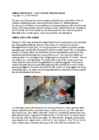
mechanism). CHS cats tend to develop kidney lesions, and have impaired vision due to the abnormal pigmentation in the retina. The University of Sydney, Australia's Faculty of Veterinary Science defines CHS as a "rare, lethal disorder" but it better meets the criteria for an "impairing mutation" as its effects can be mitigated with proper care. Affected cats are highly susceptible to infection, due to the abnormally large lysosome in their white blood cells. Bacterial infections occur repeatedly because the white blood cells cannot respond normally to infection; antibiotic treatment is required to combat infection. Prolonged bleeding tends to occur because of abnormal blood platelets delaying clotting. In the laboratory, CHS cats had a longer period of eye-flicker, compared to non-CHS Persians, after being spun around. A Blue Smoke Persian and a Chediak-Higashi Smoke Persian
Ultimately, the ultra- postmortem storage. Hoagland et al. (1917) structural changes that occur within muscle provided indication of protein breakdown by during aging are thought to be the result of showing that there was an increase in nonco- enzymatic degradation of myofibrillar and 87 88 Chapter 4 cytoskeletal proteins. Thus, the purpose of fied within the lysosome. On the other hand, this chapter is to provide an overview of the lysosomes have fragile membranes that may established theory of enzymatic aging tender- rupture with the decreasing temperature ization and to review recent developments and pH in the muscle during postmortem that contribute to a more complete under- storage. Only cathepsins B, D, H, and L have standing of the underlying mechanisms that been found to degrade the same proteins
 annaabi.ee