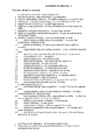
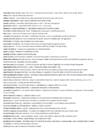
32. kahjutasu määrama – to award damages 33. kahjutasu nõudma – to claim compensation/ to claim damages 34. kohtu määrust (ettekirjutust) välja andma – to award an injunction 35. perevägivald – domestic violence 36. kohtu korraldusele mitte kuuletuma – disobeying court 37. tsiviilvastutust vältima – to avoid civil liability Explain in English: 1. civil procedure – a procedure against the alleged lawbreaker by the wronged party 2. court proceedings - trial 3. claimant – the party bringing a civil action in England 4. plaintiff - the party bringing a civil action in USA, also in Estonia 5. defendant - the party against whom a civil action is started 6. defence (counsel) – protection of smb in the civil proceeding 7. prosecution – the party bringing a criminal action 8. inadmissible evidence – the evidence that is not possible to take into account 9
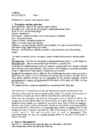
be three parties: plaintiff, defendant and third party whose rights the dispute can concern. The decision of county court can be appealed to the circuit court (second instance court). ____________________________________________________________________ 9. Criminal courts (general+your home country) The purpose of the criminal courts is to determine if the accused person has committed a crime and punish the lawbreaker (wrongdoer). It is important to protect the society and punish only persons who are guilty of a crime. The burden of proof (the obligation of proving) is on the prosecutor to prove beyond reasonable doubt that the accused (a person who is maybe guilty of a crime) committed a crime. In England children and the young persons who are accused of committing a crime are tried without a jury (a group of people who have
In a criminal court the burden of proof is on the prosecution to prove beyond reasonable doubt that the accused committed the crime charged. Also very strict rules of evidence are imposed in criminal court to ensure a fair hearing. In Estonia the crimes are dealt with in county courts. The decision of a court can be appealed to the circuit court. The purpose of the criminal courts is to determine if the accused person has committed a crime and punish the lawbreaker (wrongdoer). It is important to protect the society and punish only persons who are guilty of a crime. The burden of proof (the obligation of proving) is on the prosecutor to prove beyond reasonable doubt that the accused (a person who is maybe guilty of a crime) committed a crime. In England children and the young persons who are accused of committing a crime are tried without a jury (a group of people who have been
 annaabi.ee