Big sell, tiny targets Manufacturers use information about children's leisure activities to target them in many ways. They are targeting children at a very young age. Companies advertise products on children's television. Many of these ads are for foods and drinks, which are not particulary good for children. In addition, the packages in supermarkets that include logos or cartoon characters are attracting children. Marketing targets children at a very impressionable age. Although each parent should monitor what their children eat, drink or play with, big companies are still exploiting children for their own well-being Marko Kostap
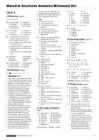
1. Ülesanne 1. A 2. D 3. B 4. B 5. A 6. C 7. C 8. D 9. C 10. B 11. D 12. D 13. B 14. A 15. B 16. A 17. C 18. A 19. D 20. B 2. Ülesanne 1. sencitivity 2. prosperity 3. novelist 4. detrimental 5. incivility 6. persistence 7. determination 8. retirement 9. alarmingly 10. impressionable 3. Ülesanne 1. crossing 2. boost 3. permulations 4. down 5. on 6. way 7. second 8. beaming 9. made 10. stole 4. Ülesanne 1. out 2. on 3. of 4. of 5. on 6. from 7. in 8. of 9. to 10. for
Big companies are using many intensive techniques to promote their products. Now big companies are targeting very young people. Often companies advertise their products, like toys, on children's television. Many ads on television are for foods and soft drinks, which are not healthy. Children are easy targets because they does not necessarily care how useless some products are. To be honest, marketing is aimed at a very impressionable age group. Although it is parents' obligation to monitor what their children eat, drink or play with, many companies are still exploiting children for their own financial gain.
Also, advertisements about non-commercial issues like AIDS can help in educating people and notifying possible problem. Finally, one big advantage is providing employment. Not only advertising itself needs many workers, but companies who are increasing their sales volume of goods mostly expand themselves and that may give job to thousands of people. Unfortunately there are some dark sides of advertising. Firstly, it uses children to increase its income and impressionable kids will make their parents life as hard as possible to get what they want, even if it is not necessary or healthy. Secondly, it encourages monopoly because big companies can afford advertising their products more so other products will stay in shadow. And finally, advertising is very expensive and the money that is spend on advertisements could have been used for charities for example. As we can see now, advertising does not have only the good side, but also the dark one. Still,
(page 65) 5.Cord- pael, nöör A moment of silence as she fingered a long corded necklace.(page 66) 6.Mope- norutama, tusatsema You’ll get a lecture on moping around.(page 71) 7.Oxygen- hapnik Then I sat cross-legged on my bed, gulping oxygen.(pages 116 and 117) 8.Proverbial- üldtuntud I’d led the proverbial sheltered life.(page 117) 9.Disembodied- maisest kehast vabanenud, eemaldunud I’d seen a disembodied hand the second morning and heard a voice later that day. (page 157) 10.Impressionable- kergesti mõjutatav, mõjutatavad At school, I imagine girls won’t look at him twice and here he is, with a pretty girl, young, impressionable, trapped-(page 248) 11.Profanity- vandumine, vandumist He whispered an exasperated, ‘’Chloe!’’ after me, followed by a halfhearted string of profanity, as if he couldn’t work up the energy to even curse properly.(page 279) 12.Distinction- vahe, eristamine, esiletõstmine He waved off my petty distinction, the old Derek sliding back
that it appeals to a larger demographic segment. The test of a good mass communication marketing drive is to see if it gets the people talking. If it does, then not only does it mean that the advertising drive has been successful, but the organization in charge of the mass communication is also getting publicity by the word-of-mouth channel! Mass Media Influence It is hard to argue with the fact that mass media has a compelling effect on the human mind. Especially on minds which are more impressionable. For example, the mass media influence on children is understandably higher than it is in adults. So how exactly does mass media influence us? Mass Media Influence on Youth There is a burgeoning need amongst the youth to be accepted as a part of a group, to be popular, to have friends and relationships with people of the opposite sex etc. Mass media experts understand this need of the people and hence they come out with
page 3233 miracle. more quickly than boys. 2 I am quite a lot less 1 1 overbearing 5 protracted 5 1 If you have, Should you have confrontational than I was when I 2 stormy 6 competitive 2 If Dad found out, If Dad were to was a kid. 3 brief 7 impressionable find out, Were Dad to find out 3 I'm not quite as self-centred as I 4 enforced 8 uplifting 3 If it weren't, Were it not was when I was younger. 4 If it hadn't, Had it not 4 Mark is the tallest in our class by 2 1 David Weir 5 If I had, Had I a long way. 2 Ester Vergeer
well give pause to newspaper editors inclined to sensationalize suicide accounts, as those accounts are likely to lead to the deaths of scores of people. More recent data indicate that in addition to newspaper editors, television broadcasters have cause for concern about the effects of the suicide stories they present. Whether they appear as news reports, information features, or fictional movies, these stories create an immediate cluster of self- infiicted deaths, with impressionable, imitation-prone teenagers being the most frequent victims (Bollen & Phillips, 1982; Gould & Shaffer, 1986; Phillips & Cartensen, 1986, 1988; Schmidtke & Hafner, 1988). ities that we find following front-page suicides is, according to Phillips, most likely due to the Werther effect secretly applied. I consider this insight brilliant. First, it explains all of the data beautifully. If these wrecks really are hidden instances of imitative suicide, it makes sense that we
 annaabi.ee