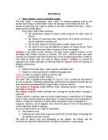
5. Expressiveness on the level of word-building Words may become expressive due to their morphological structure. · -ish+ adjective stem may give an emotionally neutral effect (brownish--a small quantity of brown) · -ish may form "tactful" words that are formed as nonce words if the speaker does not want to sound too categorical (dullish lecture, lateish) · Together with noun stems ish forms adjectives with negative, contemptuous colouring (doggish, womanish) · Negative colouring becomes stronger with compound stems (honeymoonish) (boyish, girlish have no negative evaluation) Suffixes may be added to proper names: · -ish adds a derogatory colouring (Dickensish) · -ien with names gives a high flown style (dickensien) · -esque has positive connotation and it forms an element of refine style (dantesque) · The main noun forming suffixes with negative evaluation are:-ard, -ster, -monger, -eer
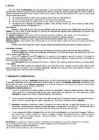
NUMERALS: on the whole numerals are not expressive but become emphatic when used in exaggeration or hyperbole or when used independently standing for a person (metonymy) (e.g. "You are a beautiful 20."). 5. EXPRESSIVENESS ON THE LEVEL OF WORD BUILDING (WB) Words may acquire expressiveness due to their structure. Affixation: suffix ish- with the adjective stem denotes a small degree of some quality (e.g. brownish). Together with nouns ish forms adjectives that are negative: doggish, sheepish, childish, etc. The negative colouring is even greater with compound stems (e.g. honeymoonish, etc.). Exception: the words "boyish" and "girlish" do not have negative evaluation. Suffixes may be added to proper names. The suffix ish- adds a negative colouring. The suffixes ien and ean render the name as lofty (e.g. Shakespearean); suffix esque- possesses positive connotation. The main noun forming suffixes that render negative evaluation are: -ard- (e.g
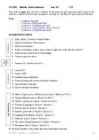
Words may acquire expressiveness due to their structure. Affixation: suffix ish- with the adjective stem the suffix denotes a small degree of some quality (e.g. brownish). Another function is to coin tactful words that are often nonce words because the speaker does not wish to sound too categorically (e.g. dull dullish; big biggish; late lateish; etc.). Together with nouns ish forms adjectives that are negative: doggish, sheepish, childish, etc. The negative colouring is even greater with compound stems (e.g. honeymoonish, come-hetherish, etc.). Exception: the words "boyish" and "girlish" do not have negative evaluation. Suffixes may be added to proper names. The suffix ish- adds a negative colouring (e.g. if the speaker has no respect for Dickens he can use suffix ish- to show it, so he can say "dickensish").
 annaabi.ee