Settlement'. There was now no part of Ireland where Catholics owned more than ½ of the land. The main reason for this was Cromwell's belief in fundamental Protestantism and hatred of Catholicism. He claimed to be acting on God's behalf and expelled about 1000 Catholic priests from Ireland. ~New Modal Army~ The New Model Army of England was formed in 1645 by the Parliamentarians in the English Civil War, and was disbanded in 1660 after the Restoration. It differed from other armies in the series of civil wars referred to as the Wars of the Three Kingdoms in that it was intended as an army liable for service anywhere in the country (including in Scotland and Ireland), rather than being tied to a single area or garrison. Its soldiers became full-time professionals, rather than part-time militia. To establish a professional officer corps, the army's leaders were
singing and dancing; in the start of the XX century already saw more serious drama on the stage. In year 1906 Paul Pinna and Theodor Altermann founded a professional theatre called `'Estonia''. Since 1998, it is called The Estonian National Opera and operates as a body governed by public law according to the National Opera Law passed in 1997 in the Republic of Estonia. Since 1918, the drama troupe was led by the actor and director Ants Lauter until 1949 when the troupe was disbanded and "Estonia" continued as just a musical theatre. In 1906 was hired the first music director Otto Hermann, 1907 saw the first operetta, Hervé's "Mam'zelle Nitouche", on stage, a steady production of operas started in the 1918/19 season. In 1911, the first Estonian operetta, Adalbert Wirkhaus' "St. John's Night" was staged. In 1926 , choreographer Rahel Olbrei founded the permanent ballet troupe in the theatre, the ballet became more regular in the 1930s
was partially modelled after his former university professor, Joseph Bell. Future short stories featuring Sherlock Holmes were published in the English Strand Magazine. Interestingly, Rudyard Kipling congratulated Conan Doyle on his success, asking "Could this be my old friend, Dr. Joe?" Sherlock Holmes, however, was even more closely modelled after the famous Edgar Allan Poe character, C. Auguste Dupin. While living in Southsea he played football for an amateur side (that disbanded in 1894), Portsmouth Association Football Club. (This club had no connection with the Portsmouth F.C. of today.) In 1885, he married Louisa (or Louise) Hawkins, known as "Touie", who suffered from tuberculosis and died on 4 July 1906. He married Jean Leckie in 1907, whom he had first met and fallen in love with in 1897 but had maintained a platonic relationship with her out of loyalty to his first wife. Conan Doyle had five children, two with his first wife
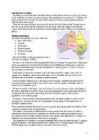
However, a great number of the soldiers were corrupted and because there was no currency in the colony, they used rum as the means of exchange. That meant that all soldiers were always drunk and made more mischief than good. 3 In 1809, a new Governor, Macquarie, began a much-needed program of restoring order in the colony. He improved the existing pattern of the roads, disbanded the New South Wales Corps and promoted exploration. Convicts were still prisoners, but if they behaved good, they could get a "ticket-of-leave", which meant that you could work for yourself. One of those convicts was Francis Greenway, who designed many famous buildings in Australia like the South Wales Parliament House for example. In the 1830's a great number of immigrants came to Australia and Aboriginals suffered badly
touring and before any possible future touring of America, which never took place. During one of the last rehearsals before the tour commenced, the group confronted Williams about his attitude and stated they wanted to do the tour without him. He agreed to quit the band and left; it would be the last time for twelve years that they were all together. Despite the departure of Williams, Take That completed their Nobody Else Tour as a four-piece band. They later disbanded on February 13, 1996, which was coincidentally Williams' twenty-second birthday. Shortly afterwards, Williams was photographed by the press partying with fellow band Oasis at Glastonbury. Following his departure, he became the subject of talk shows and newspapers as he acknowledged his plans to become a solo singer, and he was spotted partying with George Michael in France. However, a clause in his Take That contract prohibited him from
II the Strong and Leopold I, Holy Roman Emperor. Peter's visit was cut short in 1698, when he was forced to rush home by a rebellion of the Streltsy. The rebellion was easily crushed before Peter returned home from England; of the Tsar's troops, only one was killed. Peter nevertheless acted ruthlessly towards the mutineers. Over 1,200 of the rebels were tortured and executed, and Peter ordered that their bodies be publicly exhibited as a warning to future conspirators. The Streltsy were disbanded, and the individual they sought to put on the Throne--Peter's half-sister Sophia--was forced to become a nun. In 1698 Peter sent a delegation to Malta, under boyar Boris Sheremetev, to observe the training and abilities of the Knights of Malta and their fleet. Sheremetev investigated the possibility of future joint ventures with the Knights, including action against the Turks and the possibility of a future Russian naval base.
1929-1933. In Estonia it was paralleled by a political crisis. The struggle between several political parties for power led to frequent changes in government, and to instability. To avoid the possibility of Vabadussõjalaste Liit (Estonian Independence War Veterans’ League) seizing power, the Head of State Konstantin Päts enacted a state of national emergency in March 1934. The parliament was dissolved, all political parties disbanded, and to replace them Isamaaliit (Fatherland League) was founded. It was a relatively mild authoritarian regime, yet it cannot be considered a total dictatorship. 1 The “official nationalism” with its corporative nature was criticised by intellectuals. The Estonian Writers’ Association, however, supported the steps taken by the government. Social life stabilized and the economic situation improved. Eesti Raamatu Aasta (Year of the Estonian Book) in 1935 was a great national
Scores of persons have worked at home on the illustrations in the Newbold volume without success. In 1944, from among specialists in languages, documents, mathematics, botany, and astronomy then doing war work in Washington, William F. Friedman organized a group to work on the problem. Unfortunately, by the time they had, working after hours, completed the task of transcribing the text into symbols that tabulating machines could process, the war was over and the group disbanded. Their preliminary results had the effect of deepening the mystery. For they found that words and groups of words repeat more often in the manuscript than in ordinary language. This fact alone differentiates the manuscript from all other cryptograms, for all known cipher systems seek to suppress repetitions, not to intensify them. What causes this difference? Friedman thought that the manuscript represents a text in an artificial language that has divided all existence
 annaabi.ee