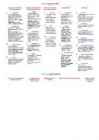
LEXICAL STYLISTIC DEVICES Based on: interaction of lexical and interaction of denotational interaction of primary circumlocution other cases contextual meaning and emotional meaning and secondary meaning 1. EPITHET 1. METAPHOR indicates individual 1. ZEUGMA 1. PERIPHRASIS 1. BATHOS
o Because of specialized lexis, foreign influences, expressive lexis Absolute synonymy – absolute sameness of all aspects of meaning. Very rare o Anyway/anyhow, everybody/everyone, Propositional synonymy – the words don’t change the meaning of the sentence difference in style/discourse o Start/commence, o Cross varietal synonymy – courgette/zucchini, tin/can, soda/pop Near synonymy o Non-denotational differences (connotational register, style) Cognitive Die, kick the bucket, pass away Firm, stubborn, pig-headed o Denotational differences – a matter of degree o Plesionyms - slight differences in denotational meaning, but fuzzy boundaries between degrees Misty/foggy 41. Opposites aka antonyms
· Spelling a word or phrase with a capital letter as if it were a proper name. It can be perceived only in writing (our Little Group of Serious Thinkers)--irony · A meaningful name, especially family names which characterize a personage (Little Miss Rich Bitch) Irony--use of the word in its opposite meaning (He is a nice, kind family man who killed his wife with an ax) 2) Stylistic devices based on the interaction of denotational and emotional meaning Epithet--a figure of speech denoting some quality through expressing an individual appraisement of a state, action and object. It's mainly subjective and evaluative (dry tailored voice, very dead, stony silence) Trite epithets are highly predictable (sweet smile, rosy lips) Compound epithets are compound adjectives (a cloud-shaped man) Syntactic epithet has a structure: A+NOUN/ADJECTIVE+A+NOUN (a devil of a time)
The use of meaningful names, which serve the writer to characterize a person (e.g. Snearwell, Mr. Snake, Mr. Blackbite, Mr. Boastall, etc.). 4. Irony is a figure of speech where the literal meaning of a word is opposite of what intended, often a positive word is used in negative sense ("I hope he brakes his neck. That is dear of you."). (8) II. Interaction of denotational and emotional meaning (Lexical Stylistic Devices) 1. Epithet indicates an individual emotional evaluation of an object or state of action. It is basically subjective and evaluative (e.g. "melodramatic hand"). The logical attribute is non-evaluative (e.g. "green grass", "white snow" these are just adjectives and not epithets). Through constant use epithets may become trite word combinations and their predictability is great (e.g. "true love", "sweat smile", "rosy
g. Snearwell, Mr. Snake, Mr. Blackbite, Mr. Boastall, etc.). 4. Irony is a figure of speech where the literal meaning of a word is opposite of what intended, often a positive word is used in negative sense (e.g. "- I hope he brakes his neck. That is dear of you." ; "What a nice birthday present it would be if someone stuck me with a pig knife. But it won't happen. No such luck."). II. Interaction of denotational and emotional meaning 1. Epithet indicates an individual emotional evaluation of an object or state of action. Epithet is basically subjective and evaluative (e.g. "melodramatic hand", "schoolmasterish finger", "tender sky", "careless beauty"). The logical attribute is non- evaluative (e.g. "green grass", "white snow" these are just adjectives and not epithets).
 annaabi.ee