On December 31, 1857, Queen Victoria was asked to choose a common capital for the Province of Canada (modern day Ontario and Quebec) and chose Ottawa. While Ottawa is now a major metropolis and Canada's fourth largest city, at the time it was a sometimes unruly logging town in the hinterland, far away from the colony's main cities, Quebec City and Montreal in Canada East, and Kingston and Toronto in Canada West. Ottawa is governed by a 24-member city council consisting of 23 councillors each representing one ward and the mayor, currently Larry O'Brien, elected in a citywide vote. As a single tier municipality, Ottawa has responsibility for all municipal services, including fire, ambulance, police, parks, roads, sidewalks, public transit, drinking water, stormwater, sanitary sewage and solid waste. Calgary Calgary is the largest city in the Province of Alberta, Canada.It's population is about 1 065 000 people
In the following years, the others followed. Only Newfoundland, discovered first by the British, remained independent until 1949. Canada is a democratic country. Political representatives are elected by citizens 18 years old and over. Canada has 3 levels of government: federal, provincial and municipal. The federal representatives are called Members of Parliament or MPs. Provincial representatives are called Members of the Legislative Assembly. Municipal representatives are called councillors. The responsibilities of the different levels of government are specified in Canada's constitution. The Queen of England is the head of state in Canada's government. She appoints a representative in Canada called the governor-general. The governor-general appoints a lieutenant-governor in each province. The actual leader of the country is the prime minister, the leader of the party that has the most seats in the House of Commons.
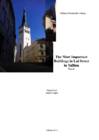
The weather-vane was put on the spire in 1530. The Town Hall is a 2-storeyed structure with a basement and 11 rooms in all. The ground floor accommodates the present vestibule, it was called a wine cellar in the Middle Ages. The room next to the vestibule was a torture chamber according to the legend, but no evidence has been found to prove it. The main or the first floor was made up of the Citizens' Hall, the Council Hall, the office, the kitchen and the toilet. In the Council Hall the town councillors held their official meetings. Town Hall Square was the real centre of the town in the Middle Ages. It was the most crowded part of Tallinn in those days. There were dwelling houses of the merchants and craftsmen at the side of the square. Numerous shops and stalls stood in front of them. The square was a market place already in the 11th century and served as such until 1896. It was called Suur Turg and got its present name Raekoja Plats only in 1923. On one side
The Town Hall is a 2-storeyed structure with a basement and 11 rooms in all. The ground floor accommodates the present vestibule, it was called a wine cellar in the Middle Ages and it may have been a trading hall as well. The room next to the vestibule was a torture chamber according to the legend, but no evidence has been found to prove it. The main or the first floor was made up of the Citizens' Hall, the Council Hall, the office, the kitchen and the toilet. In the Council Hall the town councillors held their official meetings. They also had their parties and receptions there. Town Hall Square In the Middle Ages it was the real centre of the town, the focus of its social life and the most crowded part of Tallinn in those days. There were dwelling houses of the merchants and craftsmen at the side of the square. Numerous shops and stalls stood in front of them where tradesmen sold their goods. The square was a market place already in the 11th century and served as such until 1896
when Otakar II died and his army was thrashed at the 1278 Battle of Moravské Pole (fought near modern-day Dürnkrut in Austria) by the Austrian Habsburgs. Hussite revolution The late 14th and early 15th centuries witnessed the Church-reform movement led by Jan Hus. Hus' eventual conviction for heresy and his death at the stake in 1415 sparked a nationalist rebellion in Bohemia led by the Hussite preacher Jan Zelivsk. In 1419 several Catholic councillors were flung from the windows of Prague's New Town Hall by Zelivsk's followers, thus introducing the word 'defenestration' (the act of throwing someone or something out of a window) to the political lexicon. After the death in 1419 of Holy Roman emperor and king of Bohemia Wenceslas IV, Prague was ruled by various Hussite committees. In 1420 combined Hussite forces led by military 8
29 Lai Street Lai 29, is a diele-dornse type merchant`s house built in 1412. There is a unique 15th century well in front of the building. Today the building is known in Tallinn as "Hueck House", because it belonged to that family for almost 250 years. Later the building has been extended several times and it has had a number of eminent residents. From 1683 to 1939 the house belonged to the Huecks, a family that gave the city two burgomasters and six town councillors. Also some famous guests have stayed in the house, such as the 15th century artist Bernt Notke from Lübeck and later the Russian Czar Peter I. Legend has it that the czar planted the two lime trees growing in front of the house. 8 Numerous Baroque features of interior design have been later added to to the originally Gothic house, including a mythological painted ceiling to the Rape of Europa theme. The main stairs with a balustrade and a small
palgalistele ametnikele. 6. Ühendkuningriik See valitsemise "komisjonisüsteem" on nüüd suurel määral asendatud: a) teatud Inglise nõukogude puhul otsevalitava linnapea mudeliga, mis on (kohalikul rahvahääletuse tulemusena) seal vastu võetud; b) palju tavalisemana aga "kabinetisüsteemi" heaks kiitmisega, kus peaaegu kogu täidesaatev otsustusprotsess on delegeeritud vanemnõunike komisjonile (committee of senior councillors) ja valdkondlikel komisjonidel on pigem uuriv/järelevalvet teostav kui otsustusi tegev roll. Nõukogu liikmed esindavad geograafilisi valimisringkondi (wards) ja teenivad 4 a-t (uuesti valituks osutumise korral muidugi kauem). Valimisringkonda võib esindada 1, 2 või 3 nõukogu liiget. Krahvkonnanõukogud, Londoni linnaosad ja Soti ning Walesi unitaarorganid valivad kõik oma saadikud ühekorraga iga 4 a järel. Metropoliringkonnad valivad 1/3 oma nõukogu liikmetest igal
 annaabi.ee