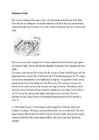
After Russia founded Bomarsund castle on just-occupied land islands and in the vicinity of the Swedish capital, Kuressaare was once and for all excluded from the list of the fortifications of the Tsarist Russia in 1836. A year before the castle had been sold to the Knighthood of Saaremaa for 3,000 roubles During 1904-1912 the convent building was renovated by architects W. Neumann and H.Seuberlich. The two upper floors of the Defence Tower were constructed anew; the window frames in the cloister of the main floor were restored and the wall between the chapel and the festive refectory rebuilt; some of the doors were relocated and windows widened; new ovens and staircases were built; stone plates with the coats-of-arms of the local noblemen were mured into wall of the cloister. In 1968 extensive restoration works were started and carried out on the basis of the plan made by K. Aluve. I recommend all to visit Kuressaare Castle, because it is a fascinating historical place for
Some reposed on the high altar whereas others were enshrined on side altars. Each `head was reputed to cure a different set of diseases. In 1517 the Reformation started in German and very quickly spread into the Baltic states. The loyalty of the friars to Rome made them immediate victims. In 1523 a Lutheran mob burnt down the Franciscan monastery in Kuramaa. The Dominican monastery in Tallinn was destroyed on ,1524. In 1954 the former garden, cloister and refectory of the Dominican monastery were restored and opened to visitors. One of the most beautiful and peacefri pleaces in Talliun is the cloister garden whict is-bordered on one side by the church of Saints Peter and Paul and on the other by the original church of Saint Catherin. The .cloisxer and refectory contain a permanent exhibition of carved stone slabs. Sea and limestone ( dolomaite) are two symbols of northern Estonia. Tallinn owes much
On the ruins if the stronghold there is a singing ground today and from here a beautiful view opens onto the surrounding area. · Kuressaare Bishop Stronghold is probably the bestpreserved medieval stronghold in all the Baltic States, being erected in the second half of the 13th century. In the center of the building from tooled dolomite bricks is a square courtyard, which is on the second and third floors surrounded by a closed cloister. There is an exposition of the Saaremaa Museum in the Stronghold that introduces the history and local nature of Saaremaa and Kuressaare. · Vilsandi National Park of international importance, belonging to the highest category of the birds' reserves, has been derived from one of the first nature reserves of the Eastern Europe in the Islands of Vaika, established in 1910. In Vilsandi and the islets tens of thousands sea birds halt, feed and nest.
autumn goes dark at midnight, one small gray man from the Ülemiste lake. He goes to the city gates and asks from the gate guard if the city is completed or is it still in the middle of the building process. Because of that the guard has to answer that the city is not completed jet and the constructions are still going on. Then the old man goes away. If, however, answered him by mistake, that the city is ready, then Ülemiste lake floats Tallinn with its water. Formerly, there was a cloister on the Vene street, what was burnt down. Old dungeons are preserved even nowadays. When the building was redecorated, then there were found many humanbones. It is believed that the owner of the Mathiesen print shop had trouble with ghost, who made the printing machines work in the middle of night. However, when the owner went to see, what is wrong, the machines stopped working and everything was silent. 5
The left wing was for the nuns and the priests lived in the right wing. The church building was completed and consecrated in 1436. Other buildings took longer to build they were completed at the beginning of the 16th century. The number of nuns was not to exceed sixty according to the regulations of the Order. A girl who wished to become a nun had to be at least 18 years old. The priests could not be younger than 25. The decline of the cloister began during the Livonian War (1558-1583). The fire of 1564 caused considerable damage to the buildings. The convent suffered its final destruction in 1577 at the hands of Ivan the Terrible. 5. Museums Kiek in de Kök is a tower in the Town Wall that stands on Harjumägi (Harju Hill), a former bastion on the slope of Toompea, and was built in the late 15th century. Today, it houses a branch of the Tallinn City Museum
8. French borrowings Administration, law, culture, fashion, religion o crown, court, power, authority, parliament, government, peace, battle, arms, siege, enemy, armour, service, saint, miracle, clergy, sacrifice, chase, scent, falcon, quarry, forest, retrieve, colour, image, design, beauty, music, romance, costume, garment, apparel, dress, train, petticoat, arch, tower, vault, column, transept, cloister, Grades of Hierarchy o baron, count, countess, duke, duchess, page, marquise, prince Leisure and pastimes o cards, chess, the chase, conversation, dice, dance, leisure, recreation, tournament, sport Culinary o veal, beef, mutton, venison, brawn, pork, ham, gammon, roast, boil, broil, fry From modern French: o aperitif/apéritif, apresski/après-ski, avant-garde, bidet, bourgeois(ie), brasserie,
 annaabi.ee