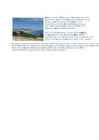
katedraal on ainulaadne ja huvitava arhitektuuripärl. Lisaks sellele on peakirikul väga vana ja keerukas ajalugu, mis hõlmab paljusi ümberkaudseid riike, millest on skulptuure ja mosaiike kokku kogutud. Oma välimuse ja ajaloo pärast on Püha Markuse katedraal tähtis vaatamisväärsus Veneetsias, mis jääb selleks veel kauaks. Kasutatud kirjandus http://upload.wikimedia.org/wikipedia/commons/9/9f/Vene http://www.tessahunkin.com/inspiration/christendom/pala http://www.annaabi.com/p%C3%BChamarkusekatedraa Tänan tähelepanu eest!
during the writing of the letter in January 1354. Pilgrims started to flow to Vastseliina both from Livonia and Germany after what happened and many who were blind and deaf had their sight and hearing restored. The Archbishop of Livonia asked the Pope in his letter for forgiveness of sins to the visitors of the chapel, giving the following reason for his request: the growth in the number of pilgrims would provide funds for the extension of the chapel in the borderlands of Christendom. So the visitors of Vastseliina were granted a forty-day indulgence. Pope Eugene renewed the indulgence in 1342. There are records of pilgrimages to the chapel in the 15th and 16th centuries. In the first century of its existence the castle was not involved in much military action. Campaigns conducted against the surroundings of Vastseliina did not concern the castle as a rule. The castle was systematically under siege for the first time in 1463 but without any result
celebrations on June 24. According to Estonian laws, the state flags are not to be lowered during the night between the days. Christmas Eve December 24 Christmas Eve is the evening or entire day before Christmas Day, the widely celebrated annual festival commemorating the birth of Jesus Christ. It occurs on December 24 in the Western Christian Church, and is considered one of the most culturally significant celebrations in Christendom and the Western world, where it is widely observed as a full or partial holiday in anticipation of Christmas Day. St. John's Day or Midsummer Day June 24 St John's Eve (Jaaniõhtu, also Jaanilaupäev) and St John's Day (Jaanipäev) are the most important days in the Estonian calendar, apart from Christmas. The short summer seasons with long days and brief nights hold special significance for the people of Estonia. Jaanipäev is celebrated in the night between June 23 and 24, a few days after
eagle and eagle owl have made Estonia their home. It is the small islets, however, that can really be called bird paradise. Undisturbed by man and protected from most smaller predators by the sea, they are real nesting sanctuaries for a diversity of birds. The first inhabitants came to the area that now forms present-day Estonia some 11 000 years ago. Estonians were one of the last pagan people in Europe. Estonia was incorporated into Christendom at the beginning of the 13th century, under the pressure of crusaders from Denmark and Northern Germany. Estonians were reduced to the status of peasantry until the 19th century. From 1558 onwards, Estonia became the battleground for the Livonian War involving Denmark, Sweden, Russia and Poland. Sweden emerged as the winner and Estonia remained under its influence until the beginning of the 18th century. During Swedish rule, the first university in Estonia was founded at Tartu in 1632
Es Culleram, and the rest of the Balearic Islands entered Eivissa's commercial orbit after 400 BC. Ibiza was a major trading post along the Mediterranean routes. Ibiza began establishing its own trading stations along the nearby Balearic island of Majorca such as Na Guardis, from which large quantities of renowned Balearic slingers were hired as mercenaries who fought for Carthage. The island was reclaimed for Christendom by Aragonese King James I of Aragon in 1235. Since then, the island has had its own self- government in several forms but in 1715 King Philip V of Spain abolished the local government's autonomy. The arrival of democracy in the late 1970s led to the Statute of Autonomy of the Balearic Islands. Today the island is part of the Balearic Autonomous Community, along with Majorca, Minorca and Forment History
Moors, as well as much of the Iberian peninsula. Under Islamic rule, Ibiza came in close contact with the city of Dénia (the closest port in the nearby Iberian peninsula, located in the Valencian Community) as the two areas were administered jointly by the same taifa. Moreover, the tribes who lived in Ibiza and Denia during the period 10601085 were Moorish tribes named Bno Alaglab & BanoMujahed. The island was reclaimed for Christendom by Aragonese King James I of Aragon in 1235. Since then, the island has had its own selfgovernment in several forms but in 1715 King Philip V of Spain abolished the local government's autonomy. The arrival of democracy in the late 1970s led to the Statute of Autonomy of the Balearic Islands. Today the island is part of the Balearic Autonomous Community, along with Majorca, Minorca and Formentera. Geography
Jewish philosopher Maimonides contrasted Islamic views of morality to Jewish views that he himself elaborated. Starting in the 9th century, Muslim conquests in the West began to be reversed. The Reconquista was launched against Muslim principalities in Iberia, and Muslim Italian possessions were lost to the Normans. From the 11th century onwards alliances of European Christian kingdoms mobilized to launch a series of wars known as the Crusades, bringing the Muslim world into conflict with Christendom. Initially successful in their goal of taking the Holy land, and establishing the Crusader states, Crusader gains in the Holy Land were later reversed by subsequent Muslim generals such as Saladin; who recaptured Jerusalem during the Second Crusade. In the east the Mongol Empire put an end to the Abbassid dynasty at 11 | P a g e
other. Roehm was shot, and soon thereafter Schimpf suffered the same fate, presumably because he had done his job so well that he knew too much. Goring replaced him with Prince Christoph of Hesse, younger brother of Prince Philip of Hesse, one of Goring's friends since the late 1920s. Christoph, then in his mid-thirties, was the fourth and youngest son of the Landgrave of Hesse, former ruler of that principality and a member of one of the oldest traceable families in Christendom (to Charlemagne). Christoph became a ministerial director in the Air Ministry and also had the title of Oberfuhrer of the S.S. He died in Italy in 1941 and was replaced by one of the original members, Gottfried Schapper. The Forschungsamt tapped telephones, opened letters, solved encoded telegrams. Its reports were called Braune Blatter ("Brown Sheets"). A typical one, of March 19, 1945, which was passed to the economic division of the armed forces, reported that on March 14 the
 annaabi.ee