Suurem osa islami stiilis ehitati maju Mughali perioodil. Islami ja hindu arhitektuuri mõju on hästi näha Taj Mahali arhitektuuris, kus on kasutusel suured mõõtmed, valge marmor, keerukad graveeringud ja minaretid(mosee tron.). Kõige levinum islami hoone Indias on mauseleum. Selle hoone muutus leidis aset Mughali perioodis, võeti kasutusele mitmekordsed kambrid, hauad viidi aedadesse, mida tunti char-bagh-ina. Hauakamber majad(cenotaph), mille alla olid hauad. Tuntumad näited on Gol Gumbaz, Bijapur ja Taj Mahal. India arhitektuuri omapära: Linnad olid reeglipärase planeeringuga, olemas olid kanalisatsioon ja kaevud. Arhitektuur ja skulptuur olid sulanud ühtseks tervikuks. Templid meenutavad pigem monumente. Pühakodade välisseinad näivad lausa koosnevat skulptuuride massist. Tempel ise võis kasvad paljude ruumidega suureks ehitiseks. Templite hämarus tulenes sammaste tihedast paigutusest
Saaremaa the Bahamas Madagascar the Channel Islands Pühad, aastaajad, kuud, nädalapäevad: Ajaloolised jm. Sündmused, mälestusmärgid: Easter the French Revolution Christmas the Ice Age Autumn the Vietnam war April the Cenotaph (mälestusmärk) Monday NB! World War I Spordialad: Kõrbed: tennis the Sahara Keeled: Rahvus, kodakondsus: English the English Estonian the Dutch NB! the Estonian language Haigused: Ilmakaared:
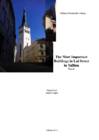
The altar part of the building with magnificent asteroid vaults dates from the 15th century. The Lady Chapel, built southwards from the chancel just before the Reformation in the early sixteenth century, is one of the most beautiful and noteworthy late-Gothic buildings in Estonia. It erected in 1502-1514 on donations of a rich merchants and art-lover Hans Pavels. It is the most interesting annexe of the church. On the eastern façade of the chapel is the cenotaph of a citizen merchant, composed like the sixteenth-century winged altarpieces. It is the work of two late-Gothic stonecarvers Clemens Pale and Hinric Brabender (nicknamed Bildensrieder). A skeleton with a toad on its chest and a serpent around its skull has been carved in the lower niche. According to Estonian folklore, Olev, the man who built the church, fell down and got killed when he was putting finishing touches to the spire. A toad and a serpent sprang out of his mouth
a three-nave basilica. The height of the central nave was 31 metres, the height of the stone tower 57 metres, while the spire, completed in 1450, reached the height of 159 metres. The St. Olaf's Church was the tallest building of the world at that time. The present late Gothic St. Mary's Chapel was built at the beginning of the 16 th century immediately before the Reformation, which also broke off its completion. The cenotaph of the warden of the church and a supporter of the chapel building, Hans Pawels, is built in the chapel wall, bearing the inscription: ''What I have given away, remains with me; what I have owned has been lost for me; no one can consider himself too high for the human life passes like smoke.'' The Lutheran reformation in Tallinn started from St. Olaf's Church. The new religious movement seized the masses and drove them against the Religious fervour
Easter is first and foremost a spring holiday to celebrate the time of new birth and the reawakening of nature. 35. Remembrance Day. Remembrance Day, also known as Poppy Day, is marked on the Sunday nearest to 11 November to commemorate the people killed in the World Wars. Ceremonies and church services are held throughout Britain. The Queen, the Prime Minister and other VIPs attend the annual (televised) service at the Cenotaph in Whitehall. During this week many people wear red paper poppies – flowers for which the area on the borders of Belgium and France is known, as many soldiers died there in WW I. There is also a two-minute silence at 11am on Remembrance Day, which is the 11th hour of the 11th day of the 11th month. 36. History of Irish State. Ireland was brought under English rule in the 12th century, but it proved difficult to
 annaabi.ee