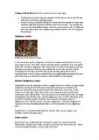
producers", 92 registered "estates", 69 co-operatives and nine producing wholesalers South African cuisine For the more daring diner, South Africa offers culinary challenges from crocodile sirloins to fried caterpillars to sheep heads. All three are reputed to be delicious. For the not-quite so brave, there are myriad indigenous delicacies such as biltong (dried, salted meat), bobotie (a much-improved version of Shepherd's pie) and boerewors (hand-made farm sausages, grilled on an open flame). Those who prefer to play it altogether safe will find that most eateries offer a familiar global menu - anything from hamburgers to sushi to pad thai to spaghetti bolognaise. And you can drink the water. On a single street in a Johannesburg suburb, one finds Italian restaurants, two or three varieties of Chinese cookery, Japanese, Moroccan, French, Portuguese and Indian food, both Tandoor and Gujarati
and cinnamon), and vegetable oil (Erkmen a wide variety of seasonings and spices that and Bozkurt 2004). Traditional sucuk are are steamed before consumption. widely produced in Turkey; more than 60,000 tons are manufactured yearly. In Lebanon, African fermented beef sausages that are strongly smoked are produced (El Magoli and Abd- Boerewors are traditional, small-caliber, Allach 2004). Sausages often contain rice, fresh sausages from South Africa made of wheat, and corn flour, and different flavors game and beef, usually mixed with pork or are obtained depending on the addition of lamb and spices (usually coriander seeds, olive oil, garlic, onion, paprika, and black black pepper, and nutmeg). When these sau- pepper. sages undergo a warm drying process after
 annaabi.ee