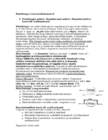
local arterioles, thus increasing blood flow. c. This mechanism, in which an increase in the activity of a tissue induces an increase in blood flow to the area, is called active hyperemia. This increase in blood flow 33 eventually lowers the levels of metabolites thus removing the original stimulus for vasodilation. In the absence of excess metabolites the arteriole returns to its original diameter. 4) Müogeeniline kontroll a. The smooth muscles in blood vessels are directly affected by pressure. b. If blood pressure and flow of blood to an organ are low then the smooth muscles of adjacent arterioles relax. The resulting vasodilation restores adequate blood flow. c. Conversely, if blood flow to an organ is excessive then
Nitric oxide (NO) is often used as a general 2001). Some proteins, such as the ryanodine term that includes NO and reactive nitrogen receptor and the cysteine protease caspase- species (RNS), like S-nitrosothyols, per- 3, have been shown to be endogenously oxynitrate, and metal NO complexes. In nitrosylated, further supporting the sugges- living tissue, NO is involved in arteriole dila- tion that formation of nitrosothiols may be tion that increases blood flow to muscles, an important regulatory step (Hess et al. resulting in increased delivery of nutrients 2001; Hess et al. 2005). μ-Calpain is also and oxygen to the muscle (Kobzik et al. a cysteine protease that could be influenced 1994; Stamler et al. 2001). NO species are by S-nitrosylation. Small thiol peptides
 annaabi.ee