400- Britannia became a part of the Roman Empire for more than 400 years. 20- About 20 large towns grew araund the camps of the Roman army. 2,000,000 – The whole population of Roman Britain was about 2 million. 2000 – There were abaut 2000 villas on the south of Britannia . 12 000 – Romans built abaut 12000 kilometers of road which were wide and straight . 410 – Most of the Roman army left Britannia and by the year 410 Roman rule was over . 5. Ülesanne Amphitheatre – Amfiteater Aqueduct – Akveduk Barbarian – Barbaarne Cavalry – Ratsavägi Election – Valimised Gladiator – Gladiaator (kutseline võitleja ) Legend – Legend Mausoleum – Muuseum Mosaic – Mosaiik Myth – Müüt Pedagogue – Pedagoogiline Professional – Profesionaalne Republic – Vabariik Sacred – Püha Sewage – Kanalisatsioon Tax – Maks Tribe – Hõim Villa – Villa Etc – Jne HADRIAN’S WALL 6 .Ülesanne Kehtestama – Led Kaitse – Defense
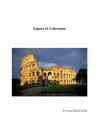
Esquiline and Palatine Hills, through which a canalised stream ran. By the 2nd century BC the area was densely inhabited. It was devastated by the Great Fire of Rome in AD 64, following which Nero seized much of the area to add to his personal domain. He built the grandiose Domus Aurea on the site, in front of which he created an artificial lake surrounded by pavilions, gardens and porticoes. The existing Aqua Claudia aqueduct was extended to supply water to the area and the gigantic bronze Colossus of Nero was set up nearby at the entrance to the Domus Aurea.Although the Colossus was preserved, much of the Domus Aurea was torn down. The lake was filled in and the land reused as the location for the new Flavian Amphitheatre. Gladiatorial schools and other support buildings were constructed nearby within the former grounds of the Domus Aurea. According to a reconstructed inscription
Coffer dams (temporary enclosures built in river beds to keep the water out while the foundations were established) were made by driving timber piles into the river bed, removing water from the area enclosed, and then excavating the soft ground inside. Despite the use of coffer dams, Roman bridge foundations typically were not deep enough to provide sufficient protection against scour. Most of the Roman bridges that survive are those built on solid rock such as the Pont du Gard aqueduct (c AD 14) near Nîmes (France), the Alcantara Bridge (AD 98) on the Spanish-Portuguese border, and the aqueduct at Segovia (AD 98), which are three of the most famous surviving Roman bridges and aqueducts. Scholars have researched Roman bridges and aqueducts for many years, so it should be possible to arrive at a well reasoned selection of Roman-built bridges for World Heritage listing. Bridges of Asia
44. Amenity value puhkamisväärtus 45. An area for sitting puhkeala/istumisala 46. An array of subsidies hulk toetust 47. An established garden- rajatud aed 48. An eyesore silmariivav objekt 49. An outdoor living area elamiseks, pikemaks ajaviimises eluruum 50. Annual- aastane (taim) 51. Apparent näiv, ilmne 52. Approach meetod, lähenemine 53. Appropriate assessment asjakohane hinnang 54. Aquatic life- veeorganismid 55. Aqueduct- akvedukt, veejuhe 56. Arcade- kaaristu, kaarkäik 57. Arched kaarduv 58. Archway- võlvialune, võlvikäik 59. Are lush on lopsakad 60. Are willing to engage - on valmis tegutsema 61. Arid regions kuivad regioonid 62. Arming varustama 63. Aromatic garden lõhvan aed 64. Articulated liigendatud 65. Artificial kunstlik 66. Artificial device- kunstlik seadeldis 67. Artificial light- kunstlik valgus 68
a. 13,6km(alustati mõlemast otsast). Sveitsis Sankt Gotthardi 1880.a. 15km 8x7,5m (kasutati esmakordselt dünamiiti). Sveitsi ja Itaalia vahel Simploni tunnel 1906.a. 19,8km. Veealused tunnelid. Thamesi all 1807-40 (Kasutati emakordselt läbinduskilpi). Eurotunnel UK FRA 50,4km Autotunnelid Mont Blanc FRA-ITA 1958-62.a. 11,5km b7m h4,6m. Autotunnelite probleem on ventilatsioon ja sellepärast on nad teistest tunnelitest suuremad ja ka kallimad (2-3 korda kallim). Pikimad USA Delaware Aqueduct 137km, , Moskva metroo 41,5km, Maantee NOR 24,5km Laerdal. 13. Liiklemine ja teed Eesti aladel kuni 13.saj (k.a) Kuna esimesed asukad olid siin loomad, siis ilmselt hakkasid ka inimesed nendel liikuma, et metslasi kätte saada ja hiljem juba harjumuspäraselt. Samuti teed veesilmani. Eks teed arenesid ka esimeste asupaikadega, olgu see siis Kunda Lammasmäe (9500 ema), Pärnu jõe alamjooks, Narva jõe vasemal kaldal. Veekogude ületamine käis kas siin
Latin abbreviations o i.e – id est – that is to say Latin adjectives for english nouns o Nasal, oral, solar, paternal, maternal, lithic, lunar, filial Actual inflected Latin verbs used as nouns o Audio, audit, caveat, video. Endings dropped or adapted, often through French o add, addition, additive, agent, agentive, aqueduct, candle, colo(u)r, colossal, consider, contemplate, decide, decision, erupt, eruption, general, generic, hono(u)r, hono(u)rable, honorary, igneous, ignite, ignition, ignoble, illiteracy, illiterate, immoral, immortality, ingenious, ingenuity, literacy, literate, literature, meditate, meditation, meditative, memorable, memory, moment, momentary, momentous, moral, morality, nobility, noble,
римлянам. Сеть дорог соединила города и военные лагеря, так что легионы могли быстро добираться до любой части страны для поддержания мира. Римских солдат обучали и воевать, и строить дороги, мосты, форты и др. Акведуки (aqueduct) доставляли в города чистую воду, которая поступала по трубам в дома. Примерно со 150 года н. э. города были окружены крепкими стенами. Люди приходили в города, чтобы продать или купить товар, уплатить налоги, развлечься и посмотреть, какова была жизнь в римском городе, где
 annaabi.ee