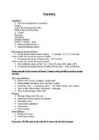
· Special forest plantations · Fertilisation · Plant breeding Forest Industry: · Felling of the trees · Processing of timber · Trees grow: 80-100 years in the wild, 60-70 years with the help of people The usage of forests: 1. Gathering · To live, get food and shelter from the woods · Don't change or harm the forests 2. EarlyAgrarian m.m. · Slash and burn -> woods replaced by brush (võsa) · Typical to Mediterranean region and East-Asia 4. Late Agrarian m.m · Very bad situation primeval fields · Population growing necessity much bigger · Forests preserved on slopes of mountains and where infertile soils were. · West Europe, North America 4. Early Industrial m.m · Development of forestry -> timber industry · Wood from boarderlands and colonies · Subequatorial and equatorial regions valuable woods · Temperate zone coniferous woods soft timber
POPULATION Influences: demographic transition birth, death economy education urbanization employment migration ethnic-cultural background Demographic transition is a theory according to which all societies start with traditional alternation of generations and they finish with modern alternation of generations (demographic explosion, ageing) TRADITIONAL ALTERNATION OF GENERATIONS -agrarian society -BR is high (10-12 children/3-4 survive) traditions, moral parents hope that their children will suport them in the future no healthcare -DR is high no healthcare epidemics -average age 35-40 THE BEGINNING OF INDUSTRIALIZATION -healthcare -development of economy -education Increase in the living standards. BR remained the same (still high) DR decreased Big amount of children in the society. 18th c. demographic explosion in Europe Factors that lead to the end of dem. explosion:
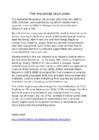
The industrial revolution The Industrial Revolution, which took place from the 18th to 19th centuries, was a period during which predominantly agrarian, rural societies in Europe and America became industrial and urban. By mid-century, many people worked for small businesses or on farms, laboring in fields that would yield barely enough food to feed the family. New inventions and technology began to change that, however. Larger factories opened and produced new farm equipment, such as the steel plow and the tractor, which allowed farmers to cultivate bigger fields and produce more food that cost much less.
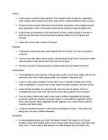
History: · Indian society is predominantly agrarian. Diet consists mainly of fruits and vegetables, meat, cereals, dairy products and honey. Also, drinks containing different types of spices. · During the Gupta empire influenced by diet buduism and jainism. Many religious people were vegetarians. Most of the people consumed the chickens, sheep and goat meat. · Muslims also put emphasis on the development of food. Indians brought to the diet of dried fruit and flat bread
plague epidemia, caused a huge demographic catastrophe. It is thought that after the Northern War there left no more than 150 000170 000 Estonians. The early 18th-century post-war crisis marked the lowest ebb in the Estonian population. But due to a high natural population growth and partly also to immigration, the number of Estonians began to rise rapidly. In 1725, the Estonian population was 220 000, in 1765, 400 000 and in 1858, 750 000. Throughout the period, Estonia was mainly an agrarian society. The townspeople formed a modest 5 per cent of the whole population. By 1782, their number had grown to 23 000. The biggest town was Tallinn with a population of 10 700; in Tartu the number was 3400. And there were some smaller towns like Rakvere and Paide, mercilessly plundered in the Northern War. Townspeople had to fight hard with the neighbouring landlords who considered them as. The population kept growing very slowly: in 1862 the number of townspeople was 64 000,
It was not a day sanctioned by the Soviet Union, so visits were often made surreptitiously. At night, one could usually determine whether households were Estonian or Russian speaking because All Souls candles burned only in the windows of the former. This deep seated reverence for dead and for respecting and maintaining graves predates the Christian era. http://www.estemb.org/estonia/holidays St. Martin's Day ( Mardipäev) (10 nov) Celebrates the end of the agrarian year and the beginning of the winter period. It also often marks the end of the period of all souls. To celebrate this, people dressed up in costumes and went from family to family, singing and wishing good luck for the crops. Children visit houses on St. Martin's Eve, singing Martinmas songs and offering good luck for crops and households. St. Catherine's Day (Kadripäev) (25 nov)
The key word for Crevecoeur was "new," which separated and distinguished Americans from things European. In Letters, Crevecoeur thus blended his collection of facts and observations into a fictional portrait of an industrious farmer, one whose natural response to the land became identified with the general character of a new American people. Yet while Crevecoeur echoed Jefferson, Thomas's agrarian ideals, his letters also acknowledged the realities of frontier savagery and southern slavery. After taking a post as a French consul in 1783, Crevecoeur published little in English, though he did publish a French revision of Letters (1787) and a final book on his American experiences: Voyage dans la Haute Pensylvanie et dans l'état de NewYork (1801). Letters from an American Farmer is an excellent example of how a New World American thinks about the many changes occurring and that have
approved by the IMF on July 28, 2010. 2013 is extremely challenging year for Ukraine in terms of servicing its debt. The table below summarizes Ukraine's FX (foreign currency) denominated debt repayment schedule for 2013 is billion $. 12 Source: Ukraine Macro Outlook for 2013 by UkrSibbank (BNP Paribas Group) Not all bad news Ukraine could be a rich country. No other European country can boast its resources of coal, iron, gas, and rich agrarian land. Almost three-quarters of its area is agricultural land, more than half arable. Though the quality of legendary black earth deteriorated during the Soviet decades, it remains among the best globally. The country has some oil and conventional gas, and perhaps more importantly, possesses as much as 4 percent of global coal reserves. Though more than half of energy consumed is imported, reserves of unconventional gas are estimated to be several trillions of cubic
 annaabi.ee