Artikkel 1.Artikli kasuamine loendamatu nimisõnaga. Snow, sugar, love, water, glass *Üldiselt loendamatu nimisõna ette artikkel ei käi. _ snow in white.artiklit ei tule This plate is made of _ glass. Artiklit ei tule *A/an ei kasutada loendamatu nimsõna ees mittekunagi. *"The" on võimalik kasutada loendamat nimisõna ees siis, kui see on väga täpselt määratletud. 1. The snow in our street is dirty. 2. The water in the River kunda is (hopefully) not polluted. 3.I like _ sugar. The sugar in this bowl is too yellow. 4.A bowl of sugar. 5. i'd like o have a tee/ a coffee. Pole loendava, aga tähendaa, et tahan tassi kohvi/teed. 2.Loendatavad nimisõnad. KUI LOENDATAVAD NIMISÕNAD KASUTATAKSE JUTUS ESMAKORDSELT JA TEMA ÜLDISEMAS TÄHENDUSES(EHK EI PEETA SILMAS ÜHTKI KONKREETSET EKSEMPLAATI), KASUTATAKSE NEID ARTIKLEID --> AINSUSES LOENDATAV MITMUSES LOENDATAV A, AN, THE ...
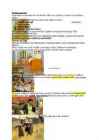
Postimpressionim Impressionismi ebamäärusele vastukaaluks hakati taas püüdlema suurema vormikindluse suunas. Tavaliselt loetakse postimpressionistide hulka nelja kunstnikku: 1. Vincent van Gogh ,,Päevalilled ,, 2. Paul Cézanne 3. Paul Gauguine 4. Henri de Toulouse-Lautree Kõik neli kunstnikku on väga erinevad, iskupärase loomingulise käekirjaga. Neid ühendab kindlam vormikäsitlus. Kui impressionistid maalisid eeskätte väljastpoolt saadud muljeid, siis postimpressionistid püüdsid väljendada oma tundeid ja meeleolusid. Vincent van Gogh Rahvuselt hollandlane. Elas Prantsusmaal vaid mõned aastad, kuid kuulub prantsuse kunsti ajalukku. Vaene, eluajal müüs vaid 1 maalid, vaimuhaigus hiljem. Lõpetas elu anesetapuga. Ta eriti armastas helekollast värvi. Tema maalides valitseb rahutu meeleolu. "Magamistuba van Gogh. Tähine öö Arles`is" Paul Céz...
Extended Rules for Using Commas Comma Use 1. Use commas to separate independent clauses when they are joined by any of these seven coordinating conjunctions: and, but, for, or, nor, so, yet. The game was over, but the crowd refused to leave. The student explained her question, yet the instructor still didn't seem to understand. Yesterday was her brother's birthday, so she took him out to dinner. 2. Use commas after introductory a) clauses, b) phrases, or c) words that come before the main clause. a. Common starter words for introductory clauses that should be followed by a comma include after, although, as, because, if, since, when, while. While I was eating, the cat scratched at the door. Because her alarm clock was broken, she was late for class. If you are ill, you ought to see a doctor. When the snow stops falling, we'll shovel the driveway. However, don't put a comma after the main clause when a dependent (subordinate) claus...
Christmas in Australia Christmas in Australia is often very hot. Whereas the northern hemisphere is in the middle of winter, Australians are baking in summer heat. It is not unusual to have Christmas Day well into the mid 30 degrees Celsius, or near 100 degrees Fahrenheit. A traditional meal includes a turkey dinner, with ham, and pork. A flaming Christmas plum pudding is added for dessert. In the Australian gold rushes, Christmas puddings often contained a gold nugget. Today a small favor is baked inside. Whoever finds this knows s/he will enjoy good luck. Another treat is Mince Pies. Some Australians and particularly tourists often have their Christmas dinner at midday on a local beach, Bondi Beach in Sydney's Eastern Suburbs attracts thousands of people on Christmas Day. Other families enjoy their day by having a picnic. If they are at home, the day is punctuated by swimming in a pool, playing Crick...
1) Standard and non-standard varieties of English Standard varieties of English are the varieties of the English language that are considered to be a norm and are spoken and written by the minority (educated people). This is the optimum for educational purposes. The standard varieties of English are: BrEng (British), EngEng (English), NAmEng (North-America), USEng (United States), CanEng (Canada), AusEng (Australia), NZEng (New Zealand). Standard English (British English) is the most widely accepted and understood among native speakers, learned by foreigners. It is used in broadcasting, TV, news etc. It doesn't concern pronounciation (accent), but grammar and vocabulary. It includes formal and informal styles. British Standard English grammar and vocabulary, together with the RP accent should be called English English. RP (Received Pronounciation) is an accent that originates from South-East of England. A social accent, associated o...
Book 1 BASIC ENGLISH BASIC ENGLISH GRAMMAR GRAMMAR BASIC ENGLISH GRAMMAR Book 1 Book 1 Younger students at beginning to intermediate levels will greatly benefit from this step-by-step approach to English grammar basics. This is the ideal supplement to your language arts program whether your students are native English speakers or beginning English language learners. Skill-specific lessons make it easy to locate and prescribe instant reinforc...
FGI 1081 Stilistika (Irina Ladusseva) Kab. 420 2 AP Ends with an exam; lasts only for 1 semester. At the exam you get 2 questions and an exercise (50 sentences: establish the device used, recognize it, and name it). Care about the pronunciation of the terms. Books: - I. Galperin "Stylistics" - I. Ladusseva "Rhythm and Text" - I. Ladusseva "Vocabulary and Style" - I. Ladusseva "Stylistic practice: Book I, Book II" - I. Ladusseva "A Guide to Punctuation" EXAMINATION TOPICS: 1. Style, stylistics, a survey of stylistic studies ...
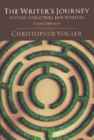
THE W R I T E R ' S JOURNEY M Y T H I C STRUCTURE FOR W R I T E R S THIRD EDITION CHRISTOPHER VOGLER S C R E E N W R I T I N G / W R I T I N G Christopher Vogler explores the powerful relationship between mythology and storytelling in his clear, concise style that's made i this book required reading for movie executives, screenwriters, playwrights, fiction and non-fiction writers, scholars, and fans of pop culture all over the world. Discover a set of useful myth-inspired storytelling paradigms like "The Hero's Journey," and step-by-step guidelines to plot and • character development. Based on the work of Joseph Campbell, The Writers Jour...
 annaabi.ee