The blossoms of the apricot, peach and plum trees motivated him, and within a month he had created fourteen paintings of blossoming fruit trees. Excited by the subject matter, van Gogh completed nearly one painting a day.The works reflect the influence of Impressionism, Divisionism, and Japanese woodcuts. Van Gogh borrowed the subject, the bold outlines and the positioning of the tree in the picture plane from Japanese printmaking. Vincent was a fan of Japanese art especially of the woodblock print genre Ukiyo-e and influence of Ukiyo-e can be seen in this famous work which was held in high esteem by the artist. Because he suffered from psychotic episodes and delusions and though he worried about his mental stability, he often neglected his physical health, did not eat properly and drank heavily. The Japanese paintings represent Van Gogh's search for serenity and helped him with his depression. In early 1890, Van Gogh’s brother Theo had a son who was named Vincent after the
The Great Wave off Kanagawa The Great Wave off Kanagawa , also known as The Great Wave or simply The Wave, is a woodblock print by theJapanese artist Hokusai. An example of ukiyo-e art, it was published sometime between 1830 and 1833[1] (during the Edo Period) as the first in Hokusai's series Thirty-six Views of Mount Fuji(Fugaku sanjrokkei (?)), and is his most famous work. This particular woodblock is one of the most recognized works of Japanese art in the world. It depicts an enormous wavethreatening boats near the Japanese prefecture of Kanagawa. While sometimes assumed to be a tsunami, the wave is, as the picture's title notes, more likely to be a large okinami literally "wave of the open sea." As in all the prints in the series, it depicts the area around Mount Fuji under particular conditions, and the mountain itself appears in the background. COPIES
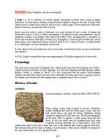
Different paper qualities are used as book paper depending on type of book: Machine finished coated papers, wood free uncoated papers, coated fine papers and special fine papers are common paper grades. 5/15 Wood block printing The intricate frontispiece of the Diamond Sutra from Tang Dynasty China, 868 AD (British Museum) In woodblock printing, a relief image of an entire page was carved into blocks of wood, inked, and used to print copies of that page. This method originated in China, in the Han dynasty (before 220AD), as a method of printing on textiles and later paper, and was widely used throughout East Asia. The oldest dated book printed by this method is The Diamond Sutra (868 AD).
 annaabi.ee