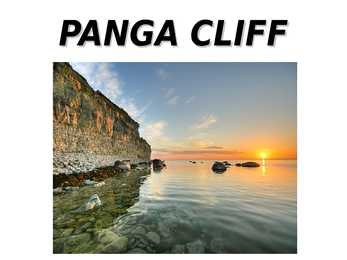
Standing at the tip of the cliff, one can clearly see another half-circular cliff under water. This is especially noticeable during storms, when the waves break against the underwater rocks, while the inside of the half-circle is calm. During bird migrations in the spring and fall, this half-circular lagoon is a favorite stopover point for storks on their long trip to and from Egypt, where most of them spend the winter. Sometimes there are well over a hundred storks, as well as other waterbirds, resting in the calm waters of the lagoon. Folk tradition ties Panga cliff as a place of worship and sacrifice for the ancient Saarlanders. It is known that until well into the 19th century, local fishermen poured libations of beer and whisky over the edge of the cliff, especially at midsummer eve, to ensure lots of fish during the coming year. There is a fishing spell that was chanted in Mustjala parish, and it says: "Come, come closer codfish to me. Bite my hook my dearest gray one.
water Conservation status ● Most common swan species of North America ● Tundra swan numbers are stable over most of its range, but they are increasingly depent on agricultural crops to supplement teir winter diet ● The tundra swan is not considered threatened by the IUCN due to its large range and population ● Bewick's swan is one of the birds to which the Agreement on the Conservation of African- Eurasian Migratory Waterbirds (AEWA) applies. Mating system ● Breed from late May through late June ● Nests – composed of moss, dead leaves, grasses; built in late May (diameter 122 to 183 cm) ● Can range 3 to 7 eggs ● Incubation period – 31 to 33 days ● Leave their nests immidiately Lifespan/Longevity ● Longest known – 24,1 years old (in wild) ● Expcted lifespan – 15 to 20 ● In captivity – 20 to 25 Food
 annaabi.ee