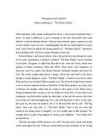
Negative intolerant - sallimatu Reckless - hoolimatu, kergemeelne Superficial - pealiskaudne Irresponsible - vastutustundetu Restless rahutu indecisive- kõhklev, ebakindel, otsustusvõimetu shallow- pealiskaudne aloof- endassesulgunud gullible- kergeusklik, lihtsameelne Contrary-vastandlik Perverse- paheline, jonnakas Unpredictable- Ettearvamatu. Unemotional-mitte emotsionaalne Rigid- kangekaelne, jäik Grudging- kade, ihne Pessimistic- pessimistlik Dull- tuim, igav, nüri Interfering- oma nina teiste asjadesse toppiv, sekkuv Lazy- laisk Dogmatic- dogmaatiline Cold- külm, kalk exaggerative-liialdav fickle- püsimatu weak-willed - tahtetu, iseloomult nõrk vague- ebamäärane, selgusetu to be easily led- kergesti eksitav Tactless- taktitundetu Kiddish- lapsik detached- eraklik, erapooletu rebellious- mässumeelne
(Mystery is one of the conventions, though.) Especially in this sequence we see that Bucky is really confident, he has the power over Madeline and her father (they tell half of the truth), his personal motivator is the murder of his own partner. He is able to shoot a woman (Madeline) In well-known Noir films like ``The Big Sleep`` and ``Chinatown`` anti-hero doesn't really look like pretty-boy Bucky but a bit older and macho. Also, when in ``The Big Sleep`` Marlowe, as an anti-hero, is really unemotional, in the closing sequence of ``The Black Dahlia`` we see that Bucky is almost crying. This may lead us to the point that in old times men didn't show much emotions in films but nowadays it is ok, even if it is Film Noir and an anti-hero. Even though, the general dress codes (suits, hats) are still exactly the same. The femme fatale in this film is Madeline Linscott (played by Hilary Swank). Before Noir genre, women were quite inactive figures in Hollywood films. They were wives,
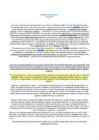
Lady Middleton - A distant relation of the Dashwoods who lives at Barton Cottage with her husband Sir John Middleton and their four spoiled children Sir John Middleton - The jovial but vulgar distant relation of the Dashwoods who invites Mrs. Dashwood and her three daughters to stay at Barton Cottage after Mr. and Mrs. John Dashwood inherit Norland, leaving the women homeless. Mr. Thomas Palmer - Mrs. Palmer's gruff, unemotional husband. Mrs. Charlotte Palmer - Mrs. Jennings' talkative and foolish daughter who invites the Dashwood sisters to stay at her home in Cleveland on their way from London to Barton. Anne Steele - Lucy Steele's older, unmarried sister who accidentally reveals her sister's secret engagement to Edward Ferrars. Lucy Steele - Mrs. Jennings' cousin and a sly, selfish, and insecure young woman. She has been secretly engaged to Edward
troubled childhood. His father died in early October 1642, a month before Isaac was born. For the first three years of his life he was sent out to a wet nurse and then lived with his grandmother. During this time his mother remarried, an act that did much to alienate Newton from his mother. As a child, Newton was never shown much love or affection. This may explain why he was always so isolated, detached and unemotional. Between 1660 and 1690, Newton devoted himself to an academic life at Cambridge. As the Lucasian Chair of Mathematics he was expected to lecture on a weekly basis, lectures which he frequently delivered to empty classrooms. He embraced a number of academic interests but the ones which interested him most were alchemy, theology, optics and mathematics. No field of study took precedence over another and he so he
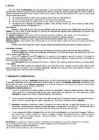
developed and perfected. Present-day emotive prose is characterized by the breaking of traditional syntactical designs of the preceding periods. 19. SCIENTIFIC PROSE STYLE The language of science is governed by the aim to prove a hypothesis, to create new concepts, to disclose the internal laws of existence, development, relations between different phenomena, etc. This language tends to be objective, precise, and unemotional, devoid () of any individuality. Its features: 1. The first and most noticeable feature of this style is the logical sequence of utterances. 2. A second feature is the use of terms specific to each given branch of science. The general vocabulary used in scientific prose bears its direct meaning, that is, words used in scientific prose will always tend to be used in their primary logical meaning
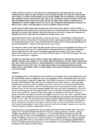
designs of the preceding periods. SCIENTIFIC PROSE STYLE (I. Galperin "Stylistics") The language of science is governed by the aim to prove a hypothesis, to create new concepts, to disclose the internal laws of existence, development, relations between different FGI 1081 Stylistics (I. Ladusseva) 28 phenomena, etc. This language tends to be objective, precise, and unemotional, devoid () of any individuality. Its features: 1. The first and most noticeable feature of this style is the logical sequence of utterances. 2. A second feature is the use of terms specific to each given branch of science. The general vocabulary used in scientific prose bears its direct meaning, that is,
Third, even when we have identified the relevant respects of similarity, they often prove to be themselves metaphorical. Searle gives the example, "Sally is a block of ice." How, according to the naive simile theorist, is Sally like a block of ice? Perhaps she is hard and very cold. But not, of course, literally hard or cold; "hard" and "cold" are themselves used metaphorically here. So Sally is only like something that is hard and cold. In what ways? Perhaps she is unyielding, unemotional, and unresponsive. But, Searle points out (p. 107), there is no sense in which blocks of ice are unyielding, unemo- tional, and unresponsive but many other inanimate things are not. Bonfires too are unyielding, unemotional, and unresponsive; but neither "Sally is like a bonfire" nor "Sally is a bonfire" is metaphorically compatible with the original sentence. The naive simile theorist would have to insist that there is a further underlying literal similarity between cold things and unemotional
positive and negative images of masculinity in a woman's dreams and fantasies. T h e anima is the corresponding female element in the male unconscious. In this theory, people have a complete set of both male and female qualities which are necessary for survival and internal balance. Historically, the female characteristics in men and the male characteristics in women have been sternly repressed by society. M e n learn at an early age to show only the macho, unemotional side of themselves. Women are taught by society to play down their masculine qualities. T h i s can lead to emotional and even physical problems. M e n are now working to regain some of their suppressed feminine qualities — sensitivity, intuition, and the ability to feel and express emotion. W o m e n sometimes spend their adult lives trying to reclaim the male energies within them which society has discouraged, such as power and assertiveness.
 annaabi.ee