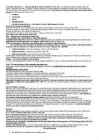
improved the economic conditions of National Party supporters (Afrikaners). Apartheid linked pre-apartheid Legislation and post- apartheid... PREAPARTHEID LEGISLATION 1911 Mines and Works Act The cornerstone of job reservation 1913 Native Lands Act Black ownership of 7% of land in South Africa (extended to 13% in 1936). 1920 Native Affairs Act Political authority over blacks given to government appointed chiefs 1923 Natives (Urban Areas) Act Established townships on outskirts of urban areas Blacks "should be educated for their opportunities in life," ... there was no place for them "above the level of certain forms of labour." These policies generated protest from students in the 1960s and 1970s. the removal of blacks from urban areas to `self-governing' rural `homelands' 1.7 million (est). people displaced 1960 1983 Few homelands were actually occupied by a majority of their designated ethnic group. The 1952 Defiance Campaign
Tallinn city centre at the participants of the political manifestation, organised by social democrats. 94 were killed, over a hundred wounded. An all-Estonian congress of people's representatives took place in Tallinn between 27 and 29 November. This split into two meetings. One demanded constitutional order and threatened the government with passive resistance; the other wanted to overthrow the absolutist power and form revolutionary local governments. In approximately 50 peasant townships, the governments were indeed replaced by peasant committees that in some places were called `republics'. In many townships, people established native-language teaching, closed the pub, and boycotted the tsarist officials, refused to pay taxes or provide the Russian army with recruits. To suppress the revolution in the Baltics, the government used an army consisting of 19 000 soldiers. Special punitive troops, aided and abetted by the Baltic German landlords, shot over
Nagu eelnevalt mainitud, on konstitutsiooni järgi riigi valitsemine jagatud kahe tasandi - keskvalitsuse ja osariikide vahel - jättes aga välja kohalikud omavalitsused. Need on reguleeritud ja seega eksisteerivad tänu osariikide õigusaktidele. (Edwards, 1998, p. 81) Ameerika Ühendriikides on 2012. aasta seisuga üle 90.000 kohaliku omavalitsuse - nende seas üle 3000 maakonna (county), pea 36 000 linnavalitsust (municipal cities & towns/townships) ning üle 51 000 eriotstarbelise valitsuse (school districts & special function districts) (United States Census Bureau). Seda, milliseid teenuseid ja võimufunktsioone linnad teostada saavad, on kehtestatud osariikide poolt põhikirjades. Üldised põhikirjad (general-act charters) rakenduvad linnadele vastavalt selle järgi, kuidas nad jaotuvad, tavaliselt toimub jaotus populatsiooni järgi. Erilaadsed põhikirjad (special-act charters) rakenduvad aga
 annaabi.ee