..because of the contest for the throne. William organized a council of war at Lillebonne and openly began assembling an army in Normandy. Offering promises of English lands and titles, he amassed at Saint-Valery-sur-Somme a considerable invasion force. · Harold Hardraada invaded northern England. Harold assembled a large army on the south coast and a fleet of ships to guard the English Channel. Then came the news that the other contender for the throne, Harald III of Norway, allied with Tostig Godwinson, had landed ten miles from York; Harold was forced to march against them. · Duke William landed at Pevensey Before Harold could return from York to south south William landed his army at Pevensey Bay . Then he decided to move to Hastings, where he built a prefabricated wooden castle for a base of operations. From there, he ravaged the hinterland and waited for Harold's return from the north. · Harold Godwineson returned to London.
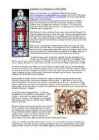
10th and 11th centuries gave their name to Normandy, a region in France. 2.How long did the Norman period last in the British Isles? 1066-1154 3.How did the Norman Conquest take place and what were the events leading to this? Edward the Confessor died and the throne was seized by his leading aristocrat, Harold Godwinson, who was crowned. Almost immediately, Harold faced two invasions - one from the king of Norway, Harald Hardrada, who was supported by Harold Godwinson's brother Tostig, and the other from William, Duke of Normandy. Harold defeated the Norwegian invasion at the Battle of Stamford Bridge in September 1066, but he was defeated and killed shortly afterwards at the Battle of Hastings. The victorious William claimed the throne. 4.What is Domesday book all about ? William the Conqueror started recording England, because he wanted to know how much tax he could raise in order to fund his armies. 5.What do you know about Bayeux Tapestry
After saying no to king he raised an army against Edward instead. The other two senior noblemen, the earls of Mercia and Northumbria, remained loyal to Edward. Later Edward outlawed Godwin and his family in Flanders. Between 1051 and 1052, Edward increased the number of Normans who advised him at court. Edward's continued favouritism caused problems with his nobles. In 1052 Godwin and his sons returned to England with an army. The army was commanded by his two sons Harold and Tostig. Godwin's lands were returned to him and many of Edward's Norman favourites were exiled. In 1053 Godwin died. His title was taken by Harold who became known as Harold of Wessex. He was the most powerful nobleman in England. It was Harold who subjugated Wales in 1063 and negotiated with the rebellious Northumbrians in 1065. Thereof, shortly before his death, Edward named Harold as his successor even though he may already have promised the crown to a distant cousin, William Duke of Normandy.
 annaabi.ee