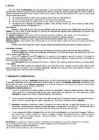
or vice versa (e.g. "I am all ears."). 3. Antonomasia from Greek "name instead". It is the use of proper name instead of the general idea (e.g. "He is a Napoleon of crime."). In the book a word or phrase may be spelled with the capital initial letters, which resembles a proper name - the effect is often irony. The use of meaningful names, which serve the writer to characterize a person (e.g. Snearwell, Mr. Snake, Mr. Blackbite, Mr. Boastall, etc.). 4. Irony is a figure of speech where the literal meaning of a word is opposite of what intended, often a positive word is used in negative sense ("I hope he brakes his neck. That is dear of you."). (8) II. Interaction of denotational and emotional meaning (Lexical Stylistic Devices) 1. Epithet indicates an individual emotional evaluation of an object or state of action. It is basically subjective and evaluative (e.g.
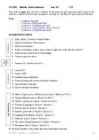
of the general idea (e.g. "He is a Napoleon of crime." "He is a sort of male Emily Bronte."). In the book a word or phrase may be spelled with the capital initial letters, which resembles a proper name (e.g. "Were so many Good Wives present."). The effect is often irony (this part of antonomasia belongs to the written text. The use of meaningful names, which serve the writer to characterize a person (e.g. Snearwell, Mr. Snake, Mr. Blackbite, Mr. Boastall, etc.). 4. Irony is a figure of speech where the literal meaning of a word is opposite of what intended, often a positive word is used in negative sense (e.g. "- I hope he brakes his neck. That is dear of you." ; "What a nice birthday present it would be if someone stuck me with a pig knife. But it won't happen. No such luck."). II. Interaction of denotational and emotional meaning
 annaabi.ee