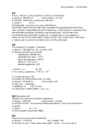
5.1 Kirk, R., Othmer, D. Encyclopedia of Chemical Technology a) Kohaviit: TE 66/K-48 riiuli number: 422-421 b) Artikkel: “Electrically conductive polymers” c) Köide: 9 lk: 61 d) Electrically conductive polymers, definitsioon: Electrically conductive polymers are composed of conjugated polymer chains with π-electrons delocalized along the backbone. In the neutral, or undoped, form the polymers are either insulating or semiconducting. The polymers are converted to the electrically conductive, or doped, forms via oxidation or reduction which form delocalized charge carriers. The conductivity is electronic in nature and no current ion motion occurs in the solid state. 5.2 Encyclopedia of Inorganic Chemistry a) Kohaviit: TE 546/E-54 riiuli number: 303 b) Physical properties of Bismuth Aatommass: 208,98 amü. Sulamistemperatuur: 271⁰C Keemistemperatuur: 1560⁰C Tihedus: 9,747 g/cm3
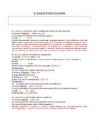
ENCYCLOPEDIA OF CHEMICAL TECHNOLOGY a) Kohaviit: TE 66/K48 Riiuli nr: 421, 422 b) Leia artikkel teemal "Electrically conductive polymers". c) Köide: 9 lk: 61 d) Esita elektrijuhtivate polümeeride (electrically conductive polymers) lühike definitsioon (võib olla inglise keeles): Electrically conductive polymers are composed of conjugated polymer chains with -electrons delocalized along the backbone. In the neutral, or undoped, form the polymers are either insulating or semiconducting. The polymers are converted to the electrically conductive, or doped, forms via oxidation or reduction which form delocalized charge carriers. The conductivity is electronic in nature and no current ion motion occurs in the solid state. 5.2. ENCYCLOPEDIA OF INORGANIC CHEMISTRY a) Kohaviit: TE 546/E54 Riiuli nr: 303 b) Millises köites ja lk käsitletakse vismuti (Bismuth) füüsikalisi omadusi "Physical properties of Bismuth" c) Köide: 1 lk: 280
Solar Energy Solar energy technologies use the sun's energy and light to provide heat, light, hot water, electricity, and even cooling, for homes, businesses, and industry. There are a variety of technologies that have been developed to take advantage of solar energy. These include: Photovoltaic Systems Producing electricity directly from sunlight. Solar cells convert sunlight directly into electricity. Solar cells are often used to power calculators and watches. They are made of semiconducting materials similar to those used in computer chips. When sunlight is absorbed by these materials, the solar energy knocks electrons loose from their atoms, allowing the electrons to flow through the material to produce electricity. This process of converting light (photons) to electricity (voltage) is called the photovoltaic (PV) effect. Solar cells are typically combined into modules that hold about
 annaabi.ee