-ING · Admit, anticipate, appreciate, avoid, complete, consider, continue, delay, deny, discuss, enjoy, escape, excuse, fancy, finish, forgive, go (for activities), imagine, involve, keep (=continue), mention, mind, miss, postpone, practise, prevent, quit, recall, recollect, report, resent, resist, risk, save, stand, SUGGEST, stop, tolerant, understand · Dislike, enjoy, hate, like, love, prefer · Be busy, it's no use, it's good, it's worth, what's the use of, can't help, there's no point (in), can't stand, have difficulty (in), have trouble, have a hard/difficult time · Spend, waste, lose · Hear, listen to, notice, see, watch, feel- ainult mingi osa tegevusest · Need, require, want + ing
And when the children ran in that afternoon, they found the Giant lying dead under the tree, all covered with white blossoms. The Devoted friend O. Wilde Once upon a time, there was an honest little fellow named Hans. He was a man with a kind heart. He lived in a tiny cottage alone and everyday he worked in his garden. Hans had many friends, but the best one was Hugh the Miller. Hugh the Miller always went to Hans's house in order to recollect flowers for himself. Hugh the Miller always talked about how important is friendship and to share everything with one's friends, but he never gave anything to Hans. Hans always worked in his garden, but in winter he felt lonely and lived in bad conditions because of the cold weather, and because anyone visited him. One night, The Millar went to see Hans with a lantern and a big stick because his son has fallen off a ladder and he wanted Hans to go to call the Doctor. However, he didn't want to
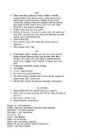
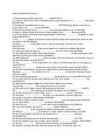
(CONSUME) 5. Better is a dinner of herbs where love is, than a stalled ox and ..................therewith.(HATE) 6. In the first quarter of the 18th century people began to realise the ......................... of hygiene to public health.(IMPORTANT) 7. The ....................collapse of the Roman Empire lasted for nearly three hundred years before its final dissolution in AD 476.(GRADE) 8. Jamie's ....................of the night's events is hazy but the tabloids will refresh his memory. (RECOLLECT) 9. We are great ........................ in fate and we believe we're meant to be together.(BELIEVE) 10. I think your stylist has taken her ............................... from the rubbish dump.(INSPIRE) 11. The statesmen and scholars have made important ................................ on ways Washington could help Russia control parts of the arsenal. (SUGGEST) 12. After denying the ........................... of any recordings of the UFO abductions, Mr President went on to
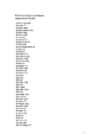
prove (v) provide (v) public speaking (n) publicity (n unc) publicity stunt (n) pudding (n) pull out of (phr v) pump (n) punch (v) punctual (adj) puncture (n) punk (n) purchase (v) 22 pursue (v) puzzled (adj) query (n) question (v) raise (v) ranch (n) random (adj) range (n) ransom (n) rash of (idm) ratings (n pl) rational (adj) raw (adj) razor (n) react to (v) realise an ambition (phr) rear its ugly head (phr) reassurance (n) rebellious (adj) reckon (v) recognise (v) recollect (v) record (n) recovery (n) recreation (n) redouble your efforts (phr) reduce (v) re-emerge (v) reference (n) reflect (on) (v) refund (n) regarded as (adj) regardless of (phr) regiment (n) region (n) register (v) regret (v) rehearse (v) reject (v) relative (n) release (v) reliable (adj) relocate (v) reluctant (adj) remind (v) remote (adj) remove (v) renowned (adj) 23 rent (v) replace (v) represent (v) reproduced (adj) reputation (n) rescue (v) researcher (n)
He could believe Copernican theory but not publicly defend it. To prove their position, the Church produced the forged minutes of Galileo's meeting with Cardinal Bellarmine in 1616. Unfortunately for Galileo, by 1632, Bellarmine was dead. The document produced by the Church was clearly forged. It acknowledged that Galileo could not hold, teach or defend Copernican theory in any way. This was a much stronger prohibition than Galileo could recollect. Without a defense of any kind, Galileo took his only reasonable option and on June 22, 1633, he recited the required abjuration on his knees: Wishing to remove from the minds of your Eminences and of every true Christian this vehement suspicion justly cast upon me, with sincere heart and unfeigned faith I do abjure, damn, and detest the said errors and heresies, and generally each and every other error, heresy and sect
He confesses that Heyward, Blackwood, Barclay, and others, that have bravely vindicated the right of kings in most points, never thought of this, but with one consent admitted the natural liberty and equality of mankind. By whom this doctrine came at first to be broached, and brought in fashion amongst us, and what sad effects it gave rise to, I leave to historians to relate, or to the memory of those, who were contemporaries with Sibthorp and Manwering, to recollect. My business at present is only to consider what Sir Robert Filmer, who is allowed to have carried this argument farthest, and is supposed to have brought it to perfection, has said in it; for from him every one, who would be as fashionable as French was at court, has learned, and runs away with this short system of politics, viz. Men are not born free, and therefore could never have the liberty to choose either governors, or forms of government
Darcy than he has received; and I am sorry to say by his account as well as his sister's, Mr. Wickham is by no means a respectable young man. I am afraid he has been very imprudent, and has deserved to lose Mr. Darcy's regard." "Mr. Bingley does not know Mr. Wickham himself?" "No; he never saw him till the other morning at Meryton." "This account then is what he has received from Mr. Darcy. I am satisfied. But what does he say of the living?" "He does not exactly recollect the circumstances, though he has heard them from Mr. Darcy more than once, but he believes that it was left to him conditionally only." "I have not a doubt of Mr. Bingley's sincerity," said Elizabeth warmly; "but you must excuse my not being convinced by assurances only. Mr. Bingley's defense of his friend was a very able one, I dare say; but since he is unacquainted with several parts of the story, and
The Japanese Government regrets to have to notify hereby the American Government that in view of the attitude of the American Government it cannot but consider that it is impossible to reach an agreement through further negotiations* December 7, 1941. The last page of the Japanese note as typed by First Secretary Katzuso Okwnura and handed to Secretary of State Cordell Hull while Pearl Harbor was being attacked The O.N.I. translator noted that "as far as I can recollect, no such Weather forecast has ever been made before" and that "it may be some sort of code." It was the long-awaited winds code execute, apparently sent indicating war with Britain to make sure that some Japanese outpost that had not reported destroying its codes by the codeword HARUNA Would burn them. Shortly after noon in Washington on the day after the attack, the President of the United States stood before a stormily applauding joint
 annaabi.ee