they do not view him. Through imagery, Kafka shows us the people striding past the cage containing the weak artist when the path to the menagerie is clear. However, when there are many people pushing behind on their way to the menagerie, many people wish to stop and observe the fasting artist but are unable to. Why do humans have these conflicting desires? Kafka asks. Although written in a third-person omniscient narration style, Kafka does not answer this question. One can interpret Kafka's goal through this piece to make his audience ponder this intrinsic question. On an ulterior level, religious analysis of this piece may answer the question. The hunger artist begins the short story as a symbol for Christ. Christ fasted for forty days, just as the hunger artist does. Kafka presents numerous images of the artist appearing as Christ such as when the women try to help him
The epic was most probably created by scop(s) who composed it for entertainment and in praise of their master. Over the three centuries the epic was being changed and adapted by them, as it was inherited by word of mouth. The events occurring in the poem are set in Southern Scandinavia, Geatland and Denmark, in the fifth and sixth centuries. It should be observed that the narrative is written in the third person point of view and the narrator is omniscient. The subject matters in this poem are restricted to war and death. This was their present and therefore interesting to them as they could identify with the characters. The restricted variety of themes, flat characters and confrontation are peculiarities of epics. The characters are either the embodiment of utmost goodness or the complete contrary. Beowulf is described as a wise, hardy, noble hero who is fighting universal
presenterade sina inriktningar som "-ismer". Olika riktningar inom modernismen drog åt olika håll; futuristerna bejakade den moderna tekniken och föraktade det gamla medan författare som T.S. Eliot blickade bakåt i tiden. Gemensamt var att modernisterna föraktade de 16 förmodernistiska ismerna naturalism och symbolism. Modernisterna bytte till ett personligare sätt att skriva, och valde ofta begränsat allvetande perspektiv (limited omniscient point of view) framför realisternas auktoritära allvetande berättare. De experimenterade också med stream of consciousness. Romantisk poesi och realistiska noveller ansåg modernisterna vara antika i det alltmer teknologiserade och sekulära moderna samhället. Svensk modernism Tidiga svenska modernister hämtade inspiration från de olika ismerna nere på kontinenten. En tidig programförklaring kom från Pär Lagerkvist som 1913 som menade att litteraturen
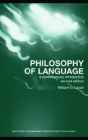
under which the sentence is true or false. It determines the truth-value of the sentence in various possible states of affairs, at various times, at various places, for various speakers, and so on. (p. 22) I believe the idea is this: If you understand a certain sentence S, and you are shown a possible world at random--we fly you there and dump you down in that world, miraculously making you omniscient as regards its facts--then right away you know whether S is true or false. (If you know every single fact of that world and you still cannot tell whether S is true there, then you cannot understand S.) So one thing that a meaning does is to spit out a truth value for any world it is given. Which is to say that a meaning is at least a truth condition in the sense of a particular set of worlds. (This leaves it open that a meaning may include more than just a truth condition.)
the enemy held; prisoners reported that an intercepted radio message had given them foreknowledge of the attack. Another attack before dawn on the 12th likewise failed, and the 45th Division gave up the effort to regain the Factory." As the Allies gained air superiority and the Germans could no longer reconnoiter by air, they depended more and more on radio intelligence. This was especially true after the Normandy invasion. But this means was not omniscient. In the fall of 1944, when General George Patton's army was preparing to bite out the fortress of Metz, the German forces detected his preparations, largely through radio. "Yet," wrote a German staff officer, "the actual attack on 8 November came as a surprise to the front line troops." In the field, the German Army's communication intelligence unit worked closely with the Luftwaffe's Funkauf-klarungsdienst ("Radio Reconnaissance Service"). This was the intelligence side of the Air Force's
 annaabi.ee