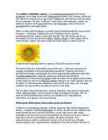
Sunflower
II. Uses:
A. Edible(söödav)oil:
Commercially available sunflower varieties contain from 39 to 49% oil in the seed. In
1985-86, sunflower seed was the third largest source of vegetable oil worldwide,
following soybean and palm. The growth of sunflower as an oilseed crop has rivaled that
of soybean, with both increasing production over 6-fold since the 1930s. Sunflower
accounts for about 14% of the world production of seed oils (6.9 million metric tons in
1985-86) and about 7% of the oilcake and meal produced from oilseeds. Europe and the
USSR produce over 60% of the world's sunflowers.
The oil accounts for 80% of the value of the sunflower crop, as contrasted with soybean
which derives most of its value from the meal. Sunflower oil is generally considered a
premium oil because of its light color, high level of unsaturated fatty acids and lack of
linolenic acid, bland flavor and high smoke points. The primary fatty acids in the oil are

 annaabi.ee