Edward the Confessor & Westminster Abbey
Edward's continued favouritism caused problems with his nobles. In 1052 Godwin and his sons
returned to England with an army. The army was commanded by his two sons Harold and Tostig.
Godwin's lands were returned to him and many of Edward's Norman favourites were exiled. In 1053
Godwin died. His title was taken by Harold who became known as Harold of Wessex. He was the most
powerful nobleman in England.
It was Harold who subjugated Wales in 1063 and
negotiated with the rebellious Northumbrians in 1065.
Thereof, shortly before his death, Edward named
Harold as his successor even though he may already
have promised the crown to a distant cousin, William
Duke of Normandy.
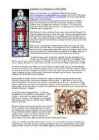
Edward's greatest achievement was the construction of
a new cathedral, where virtually all English monarchs
from William the Conqueror onward would be crowned.
It was determined that the minster should not be built in
London, and so a place was found to the west of the
city (hence "Westminster")

 annaabi.ee