are related to the season, which severely affect the availability of fresh food. The spring and summer are the seasons of fresh food, in this period are used vegetables, berries and herbs, with the warmer climate the Estonians also like to cook meat grilled outdoors. During the winter are used mushrooms, jams, and preserved foods. Among the typical Estonian dishes are: Baltic fish in acid sauce, pork with sauerkraut and boiled potatoes, blood sausage and barley, marinade anguilla, boiled pork in jelly, tongue, smoked fish and a kind of dry cake-like barley bread. Milk and all kinds of dairy products such as fermented milk, yogurt and various dishes made with rennet are very common. Among the desserts are the kissell, curd, rhubarb cake and kama. The national drink is malt beer or barley and rye beer. Other popular drinks are kali and liquor Vana Tallinn. Many newspapers say young Estonian people have bad eating habits. The breakfast should be
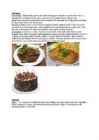
German Sauerbraten: Traditionally made with a beef roasting joint (topside or similar) the meat is marinated for 2-3 days in beer, spices such as cloves, juniper berries, allspice and peppercorns, bay leaves and onions and is braised in the marinade for a long period, resulting in very tender melt-in-the-mouth meat. The Black Forest: cake is one of the most popular German national foods. Cake consists of several layers of chocolate cake, with whipped cream and cherries between each layer. Then the cake is decorated with additional whipped cream and chocolate shavings. A Schnitzel in German is a slice of pork or veal haunch. Dish made with boneless meat thinned with a mallet (escalope-style preparation), coated in bread crumbs and fried
It was nice to be inside the supermarket; it felt normal. I did the shopping at home, and I fell into the pattern of the familiar task gladly. The store was big enough inside that I couldn't hear the tapping of the rain on the roof to remind me where I was. When I got home, I unloaded all the groceries, stuffing them in wherever I could find an open space. I hoped Charlie wouldn't mind. I wrapped potatoes in foil and stuck them in the oven to bake, covered a steak in marinade and balanced it on top of a carton of eggs in the fridge. When I was finished with that, I took my book bag upstairs. Before starting my homework, I changed into a pair of dry sweats, pulled my damp hair up into a pony-tail, and checked my e-mail for the first time. I had three messages. "Bella," my mom wrote... Write me as soon as you get in. Tell me how your flight was. Is it raining? I miss you already. I'm almost finished packing for Florida, but I can't find my pink blouse. Do you know
1986); rice fibers relative to the face of the steak (Farouk bran oil (Kim et al. 2000); the aqueous extract et al. 2005c). The use of enhanced meat in of rosemary, sage, and thyme (Mielnik et al. hot-set restructuring will improve tenderness 2008); grape seed extract and pine bark and juiciness of the final product. The injec- extract (Ahn et al. 2002); and Chinese five- tion of beef with up to 20% marinade (mostly spice ingredients composed of cinnamon, a solution of salt and phosphates) to enhance cloves, fennel, pepper, and star anize tenderness and palatability is becoming a (Dwivedi et al. 2006). Reverte et al. (2003) common practice in many countries (Maca and more recently Stika et al. (2008) added Restructured Whole-Tissue Meats 417 propyl gallate and a beef flavoring in the for- pieces
 annaabi.ee