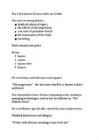
Poe's best known fiction works are Gothic His most recurring themes : death (its physical signs) the effects of decomposition concerns of premature burial the reanimation of the dead, mourning Dark romanticism genre Wrote : horror satires humor tales hoaxes He used irony and ludicrous extravagance "Metzengerstein" - the first story that Poe is known to have published Poe reinvented science fiction responding in his writing to emerging technologies such as hot air balloons in "The Balloon-Hoax" He used themes specifically catered for mass market tastes. Disliked didacticism and allegory "Works with obvious meanings cease to be art." "Quality work should be brief and focus on a specific single effect. " "The writer should carefully calculate every sentiment and idea."
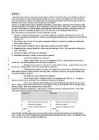
· fable and action are grave and solemn · fable and action are light and ridiculous · characterrs are the highest · characters are inferior · sentiments and diction preserve the · sentiments and diction preserve the sublime ludicrous · verse · verse When the first novelists began writing what were later called novels, they thought they were writing "prose epics." Daniel Defoe, Henry Fielding, and Samuel Ruichardson attempted the comic form. Yet what they wrote were true novels, not epics, and there are differences. Serious epic Comic epic
while the Whigs are represented by the High Heels. Considering that Swift himself changed parties, he must have understood that political allegiance was important. Yet, political bickering is often about such unimportant matters as the height of one's heels. It is interesting to note that even though lying is seen as a terrible offense in Lilliput, Flimnap tells a huge lie (that Gulliver slept with Flimnap's wife) and gets away with it. Apart from the ludicrous physical implications of a giant having relations with a Lilliputian, the problem here is that the society must be able to enforce its norm against lying for the law to matter. This may also be a commentary on the seeming ability of those in positions of power to get away with breaking the law. When the law comes down unfairly on Gulliver, he has actual rather than statutory power to leave, so he simply leaves Lilliput to live with their enemies.
feminist and a post-structuralist critic. Holderness’s parodistic readings have a central position in the volume for precisely the same reason as Larkin’s “Posterity” does in High Windows. In the first place, the poem entitles the reader to see Larkin through the eyes of Jake Balokowsky, his fictitious biographer, but Larkin also ridicules this young cosmopolitan scholar. Holderness’s Cleanth, Raymond, Kate, and Colin are both serious and ludicrous. Holderness has created four possible scholars, and he does not say that any of them are wrong. He laughs at them, but does not reject their readings. In a Larkinesque manner, he wears the masks of four critics to demonstrate the diversity of Larkin criticism. In an earlier monograph (Philip Larkin, 1992), Regan outlines the main trends of Larkin criticism. In so doing, he identifies a watershed: “After 1974, when High
witchcraft claimed they were being tormented by the 'spectres' of the people who bewitched them. That happened at Salem in 1692 but the authorities decided that spectral evidence was not enough to obtain a conviction. As a result the witch hunt collapsed.Some Protestant scholars also pointed out that 4 popular beliefs about witches had no support from the Bible. Many people believed witches existed but did not believe the more ludicrous stories about them. Furthermore most people also became sceptical about cases where witches were supposed to have used magic to kill people. Increasingly people realised that the deaths might have been due to natural causes and they required proof they that were not. People did not necessarily stop believing in witches, at least not at first, but they became much more cautious about accepting 'evidence' of witchcraft realising that many maladies and mishaps have natural causes.
Unlike the positivists, he thinks sentences like (1)(4) do have meanings; but he contends that the meanings they have are just their literal meanings (however strange). "Metaphors mean what the words, in their most literal interpretation, mean, and nothing more" (p. 30). When Romeo uttered (2), 178 The dark side he was saying only that Juliet was, literally, the sun, though doubtless he was doing more than just expressing that ludicrous falsehood. Davidson's article is largely devoted to his negative case against "meta- phorical meaning"; he gives several critical arguments, two of which we shall consider later on. But he does sketch a positive account of the significance of metaphor. It is brutely causal: A metaphor makes us attend to some likeness, often a novel or surprising likeness, between two or more things. (p. 31, italics added)
 annaabi.ee