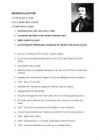
EDGAR ALLAN POE ,,All that we see or seem Is but a dream within a dream" A Dream within a Dream. · American poet, critic, short story writer · considered the father of the modern detective story · highly lauded as a poet · psychologically thrilling tales examining the depths of the human psyche · born on 19 January 1809 in Boston, Massachusetts · son of actors Elizabeth Arnold Hopkins (1787-1811) and David Poe (1784- 1810) · had a brother and a sister · after the death of his parents was taken in by Frances (d.1829) and John Allan (d.1834) · travelled with the Allans to England in 1815 and attended school in Chelsea · 1820 - back in Richmond
destroyed the United States. Uncle Tom's Cabin contributed to the outbreak of war by personalizing the political and economic arguments about slavery. Stowe's informal, conversational writing style inspired people in a way that political speeches, tracts and newspapers accounts could not. Uncle Tom's Cabin helped many 19thcentury Americans determine what kind of country they wanted. Immediately after its publication, Uncle Tom's Cabin was both lauded as an achievement and attacked as inaccurate: The most liberal abolitionists felt the book was not strong enough in its call to immediately end slavery, disliked Stowe's tacit support of the colonization movement, and suggested that Stowe's main character Tom was not forceful enough. More moderate antislavery advocates and reformers praised the book for putting a human face on those held in slavery,
on the natural-gas usage of the families. Did they return to their old, wasteful habits when the chance to be in the newspaper was removed? Hardly. For each of the remaining winter months, these families actually conserved more fuel than they had during the time they thought they would be publicly celebrated for it! In terms of percentage of energy savings, they had managed a 12.2 percent gas savings dur- ing the first month because they expected to see themselves lauded in the paper. However, after the letter arrived informing them to the contrary, they did not re- turn to their previous energy-use levels; instead, they increased their savings to a 15.5 percent level for the rest of the winter. Although we can never be completely sure of such things, one explanation for their persistent behavior presents itself immediately. These people had been low- balled into a conservation commitment through a promise of newspaper publicity.
 annaabi.ee