(2) 71- Tegusõnad: 72- Anuta keeles on lisaks lõpmatu plussi (infinite plus) ajavormile veel ka 4 järgmist vormi: 73- lõpmatus- 'ke' 74- tulevik- 'ka' 75- olevik- 'e' 76- minevik- 'ne' 77- täisminevik- 'ku' 78- 79- Tegusõna 80- Tõlge 81- Mitmus 82- Kai 83- sööma 84- Kakai 85- Karanga 86- rääkima 87- Kararanga 88- Moe 89- magama 90- momoe/moeraki 91- Nopo 92- elama 94- nonopo/noporaki 93- istuma 95- Tu 96- seisma 97- Turaki 98- 99- (2) 100- Nimisõnad:
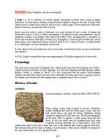
the heart. Papyrus, a thick paper-like material made by weaving the stems of the papyrus plant, then pounding the woven sheet with a hammer-like tool, was used for writing in Ancient Egypt, perhaps as early as the First Dynasty, although the first evidence is from the account books of King Neferirkare Kakai of the Fifth Dynasty (about 2400 BC). Papyrus sheets were glued together to form a scroll. Tree bark such as lime (Latin liber, from which also comes library) and other materials were also used. According to Herodotus (History 5:58), the Phoenicians brought writing and papyrus to Greece around the 10th or 9th century BC. The Greek word for papyrus as writing material (biblion) and book (biblos) come from the Phoenician port town Byblos, through which papyrus was exported to Greece
 annaabi.ee