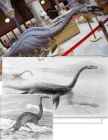
Loch Ness Monster Nessie, a giant lake monster, supposedly inhabits Scotland 's Loch (Lake) Ness. Nessie is the world's best-known cryptozoological creature and has been sighted as far back as 656 AD. Nessie is described as being anywhere from twenty to forty feet long, with two humps, a tail and a snakelike head. Nessie's movements have been studied, and many films and photos analyzed, to determine what Nessie might be, if she exists. For the last seventy years or so, since she began receiving regular publicity, Nessie has been a major tourist attraction
· Nessie · 60 feet long · a long tail with 4 fins and a big head · the water horse · categorized: 1. unknown species of large animals 2. mystic or paranormal 3. misidentification of known animals 4. inanimate objects or effects 5. hoaxes Plesiosaur · a longnecked aquatic reptile · a coldblooded reptile Longnecked seal · lake monsters on land · land during daylight hours to sunbathe Eel · first suggestions · eat bigger fish · inhabits the loch Elephant · elephants refresh themselves in the loch Kelpie Interesting facts · a lot fresh water · never freezes · sediments and peat Source · http://en.wikipedia.org/wiki/Loch_ness · http://en.wikipedia.org/wiki/Loch_Ness_Monste · http://images.google.ee/images?q=loch+ness+
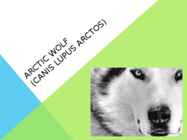
• They hunt in packs. • They prey mainly on caribou and muskoxen, but also arctic hares, seals, ptarmigan, lemmings and smaller animals such as waterfowl. ARCTIC WOLVES ARE SMALLER THAN GREY WOLVES, THEY ALSO HAVE SMALLER EARS AND SHORTER MUZZLES TO RETAIN BODY HEAT. GREY WOLF ARCTIC WOLF HABITAT AND DISTRIBUTION • They have lived in North America for more than two million years. • The arctic wolf inhabits the Canadian Arctic and the islands, parts of Alaska and northern parts of Greenland. • In their natural habitat, they rarely encounter humans. MAIN THREATS • The greatest threat to the Arctic wolf is climate change. • Extreme weather variations in recent years have made it difficult for populations of muskox and Arctic hares to find food, and this has caused a decline in numbers. CLIMATE CHANGE THANK YOU FOR LISTENING! REFERENCES
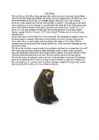
Its inward-turned feet make the bear's walk pigeon toed, but it is an excellent climber. It has small, round ears and a stout snout. The tail is 1.2-2.8 inches (3-7 cm) long. Despite its small size, the Sun Bear possesses a very long, slender tongue, ranging from 8 to 10 inches (20-25 cm) in length. The bear uses it to extract honey from beehives. Unlike other bears, the Sun Bear's fur is short and sleek. This adaptation is probably due to the lowland climates it inhabits. Dark black or brown-black fur covers its body, except on the chest, where there is a pale orange-yellow marking in the shape of a horseshoe. Similar colored fur can be found around the muzzle and the eyes. These distinctive markings give the Sun Bear its name. The diet of the Sun Bear consists mainly of invertebrates and fruits but as omnivores they will eat a wide variety of foods including small vertebrates, such as lizards, birds, and turtles,
 annaabi.ee