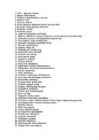
27. Erupt- vallanduma 28. Formation- kujunemine, moodustumine 29. Innervation- närvirakkudega varustamine 30. Extracellular- rakuväline 31. Permanent teeth- jäävhambad 32. Scaffold- tellingud, telling 33. Abrasion- hõõrumisjälg, kulumine 34. Implantation- siirdamine 35. Wisdom teeth- tarkusehambadf 36. Germ- eos, alge 37. Progenitor- eelkäija, rajaja 38. Contribute- kaasa aitama, soodustama 39. Primordium- organi, rakulise struktuuri või koe kõige varajasem arenguprotsess 40. Immunosuppressive- immuunreaktsiooni pärssiv 41. Exfoliate- koorima 42. Shed- välja langema 43. Denote- teatavaks tegema 44. Deciduous teeth- piimahambad 45. Chondrocytes- kõhrerakud 46. Lipocytes- rasvarakud 47. Osteoblasts- luurakud 48. Myocytes- lihasrakud 49. Cardiomyocytes- südamelihasrakud 50. Undergo- läbi elama, kogema 51. Constitute- moodustama 52. Viable- elujõuline, mõistlik 53. Rodent- näriline 54. Customs- toll 55. Obtain- saavutama 56
Pederson, 1994; Fitzgerald, 1998). Emotion regulation in relation.. 1 Figure 3. The Hypothalamic-Pituitary-Adrenocortical Axis (HPA) Cortisol has been widely used in psychology to measure stress. Cortisol has metabolic effects on liver glucose sythnesis, breakdown of skeletal muscle protein to amino acids and in adipose tissue mobilizes fat. It can also have anti-inflammatory and immunosuppressive actions depending on concentration (Rhoades & Pflanzer, 1989). Most of these physiological effects prepare the body for hostile conditions. Cells of the immune system respond to stress or injury in many of ways (Benoy & Heels, 1998; Mayer & Watkins, 1998; Brines et al, 1996). They secrete a number of cytokines (signalling protein) such as interleukin-6 (IL-6) which is a pro- inflammatory cytokine that mediates the acute phase response to stress. The cytokine
 annaabi.ee