MUST- tugev kohustus enda seisukohalt MUSTN'T- range keeld MUST HAVE IIIpv kui ollakse peaaegu kindel millegi toimumises. HAD TO - kohustus ja vajadusminevikus HAVE TO - tugev kohustus teiste seisukohalt. DON'T HAVE TO, DIDN'T HAVE TO pole kohustust DO/ DOES/ DID NOT NEED TO - millegi tegemine polnud vajalik NEED TO- vajadus midagi teha CAN võimet midagi olevikus või tulevikus teha. CAN'T- kui ollakse kindel millegi ebatõenäosuses COULD minevikus võime midagi teha COULD/MIGHT HAVE IIIpv- kui on võimalik et midagi toimus minevikus, aga selles ei olda
will/may/might+have been + ing N: I will have finished my homework by 6o'clock. By the time our plane arrives,we will have ben waiting for exactly five hours. Indirect questions : (could you tell me; I wonder (whether); I would like to know) Conditional sentences : I If `' I põhivorm'', will + I pv. N: If I study hard, I will get a good mark. II If II pv I (did + I pv eitav lause), would + I pv. N: If I studied hard, I would get a good mark( kui ma õpiks, ma saaks) III If had + IIIpv,would+ have + IIIpv N: If I had studied hard, I would have got a good mark. (oleksin, oleksin saanud) N: I would help If I could, but I'm afraid I can't. If he had missed it he would have been late.. If I had have your address I would had sent you a postcard. If the weather had been better If I was tired, I'd go home now Tag questions : They are sleepy, aren't they ? The aren't sleepy, are they? She loves cooking, doesn't she ? She doesn't love cooking, does she ?
järjekord muutub nii nagu jaatavas lauses) TEISI MUUTUSI .. oluline Rasmus!!! Õpi päheeee!!! Today -> that day That/These->those Tomorrow-> the next day Here->there Yesterday -> the day before Can->could Ago-> before Will->would This->that Must-> had to Põhimõtteliselt: Ipv -> IIpv IIpv->had+IIIpv Did->had don't see->didn't see does he see? -> it he saw
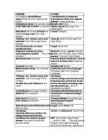
sick,the eldery English, the English language the Second World war, aga World War II Tense/verActive Passive b form Present I pv+es I walk/he walks Am/is/are+III pv House is built simple every day (every every month. (ehitatakse) -week,day,summer,ofte n, usually,always,nowaday s) Present Am/is/are+ing I am Am/is/are+being+IIIpv A house is Continuoworking. He is eating. being built. (ehitatakse praegu) us (now,at the moment, presently) Past II pv. He left after lunch. Was/were+III pv A house was built. simple (yesterday, last- (ehitati) year,month,week) Past Was/were+ing I They Was/were+being+III pv A house continuouwere working at 9o'clock. was being built. (ehitati parajasti) s (yesterday 5o'clock,when that happened)
, last night etc, in 1999 etc I worked ... I didn't work ... Did you work PAST CONTINUOUS [was/were + ing] kestev minevik · tegevused, mis kestis minevikus. me ei maini tegevuse alguse- ja lõppaega. · tegevused minevikus, mida katkestati mõne teise tegevusega · kaks kestvat tegevust minevikus · atmosfääri kirjeldamiseks väljendid, mida kasutatakse: while, when, as, all morning etc He was working He wasn't working Was he working PAST PERFECT [had + IIIpv] täisminevik · tegevus, mis juhtus minevikus enne teise tegevuse algust minevikus. · tegevused, mida lõpetati minevikus ja mille tulemus ilmus ka minevikus väljendid, mida kasutatakse: before, after, already, just, for, sinve, till, until, when, by the time, never etc. He had worked He hadn't worked Had he worked PAST PERFECT CONTINUOUS [had been + ing] · tegevused, mida tehti minevikus enne teise teadaoleva tegevuse algust. (for, since)
 annaabi.ee