Haanja Nature Park Where? When? Located: Võru County, in the Haanja Uplands Area:About 20 000 ha History: 1957- Suur-Munamägi, Vällamägi protection 1997 Haanja landscape reserve was created What are habitats there? Farmhouses are spread far apart Plains of glacial river Plains of glacial lake Small plots of land Poor arable land Morainplains Grasslands Pastures Inhabitants Braun's holly fern Yellow hydrangea Lady's-slipper orchid Hairy Maarja-leaf Animals · Roe · Badger · Boar · Beaver · Fox · Mink · Gray rabbit ·
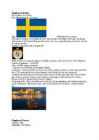
Landscape - Traveling north, you'll pass by endless numbers of lakes, streams, pine and birch trees. The landscape becomes more dramatic, and rolling hills rise into mountains. Southern and central parts of the country have warm summers and cold winters, the northern part of the country has shorter, cooler summers and longer, colder and snowier winters. Famous for Pipi Longstocking by Astrid Lindgren Interesting facts - When you travel to Sweden you will see traditional red wooden farmhouses in the countryside. The famous colour, also known and loved in Estonia, is called Swedish red. Kingdom of Norway Capital Oslo Language Norwegian The flag of Norway is red with an indigo blue Scandinavian cross outlined in white that extends to the edges of the flag. Symbols - With elk as the National Animal, purple heather being its National Flower and dipper as its national bird. Size 323,802 square kilometres Population - 4,999,800
for many local families. The mulgi inhabitants were actually the first farmers in Estonia who bought the farms for their families after being released from the servitude. The farming was developed rapidly thanks to flax-growing. The wealthiest farmers gained even so much money that for the first time in history Estonian farmers became owners of mansions. The wealthy mulk were the first of Estonian farmers to build manses, until then the farmers all over Estonia lived in farmhouses that included a barn so that people and animals lived under one roof. The old farmhouses and mansions can still be seen in many places in Southern Viljandimaa. As a result of the hard work and the tenacity of the local inhabitants, Mulgimaa developed into an area known as prosperous and rich by its cultural heritage. The masters working in the villages played an important role in the development. The local foods such as sauerkraut stew, curd cake and ,,kama" (a meal
The Museum of Applied Art stands on the corner of Lai and Aida Street. It offers collections of pottery, leatherwork, metalwork, glasswork, carpets and jewellery. The Theatre and Music Museum in Müürivahe Street has a display of old musical instruments. The Estonian Open-Air Museum at Rocca al Mare is actually the Estonian Village Museum (established in 1957). The museum is divided into sections that show typical village architecture (old farmhouses and outbuildings) of certain areas. Districts The City of Tallinn is divided into City Districts. Tallinn consists of 8 different districts. Haabersti. The heart of the district is the residential area consisting of the big panel houses of Väike-Õismäe, which were mostly established in the seventies. The territory of Haabersti is 18,6 km². Kesklinn. It consists of the historical Old City and the surrounding suburbs with wooden
 annaabi.ee