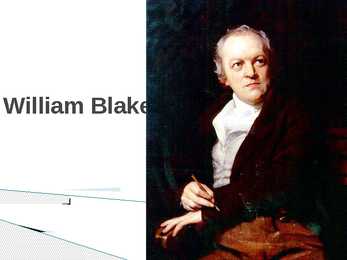
William Blake William Blake was borned in 1757 and died in 1827. He was an English poet, painter, and printmaker. He was the third of seven children. The Bible was an early and profound influence on Blake. At the age of 21, he was to become a professional engraver. After two years, Basire sent his apprentice to copy images from the Gothic churches in London His experiences in Westminster Abbey helped form his artistic style and ideas. Later life and career Blake's marriage to Catherine remained a close and devoted one until his death. Blake taught Catherine to write, and she helped him to colour his printed poems. William and Catherine's first daughter and last child might be Thel described in The Book of Thel who was conceived as dead. Politics
Taj Mahal It is a monument located in Agra, India. Built on the desire of Mughal Emperor Shah Jahan, the son of Jahangir, as a mausoleum for the wife of Persian, Arjumand Banu Begum, also known as Mumtaz-ul-Zamani or Mumtaz Mahal. Development spent the next 23 years (1630-1653) and is a masterpiece of Mughal architecture. Ustad Ahmad Shah Jahan ordered the making of this building. Ustaz Ahmad workers gather 20,000 people consisting of a mason, goldsmith and engraver who famous from around the world. With the roof, dome and minarets are made of white marble, and beautiful art mozak. Some 43 types of gemstones, the diamond inclusion, jed, crystal, topaz, and patchouli has been used to obtain beautiful Taj Mahal. Giza Pyramid It is the oldest and largest pyramid of the three pyramids in Giza Nekropolis. Built as a tomb for Fourth dynasty Egyptian pharaoh, Khufu. Built for more than 20 years and is expected to take place in about 2560 BC
Kipling being mistaken for a Nazi-sympathiser, though the Nazi party did not adopt the swastika until 1920. Kipling's use of the swastika was based on the Indian sun symbol conferring good luck and well-being; the word derived from the Sanskrit word svastika meaning "auspicious object". He used the swastika symbol in both right- and left-facing orientations, and it was in general use at the time. Even before the Nazis came to power, Kipling ordered the engraver to remove it from the printing block so that he should not be thought of as supporting them. Less than one year before his death Kipling gave a speech to The Royal Society of St George on 6 May 1935 warning of the danger Nazi Germany posed to the UK. The Jungle Book is a collection of stories by British Nobel laureate Rudyard Kipling. The original publications contain illustrations, some by Rudyard's father, John Lockwood Kipling. The tales in the book (and also those in
 annaabi.ee